Madame Mortelle
Madame Mortelle is not an aesthetic.
She is a practice.
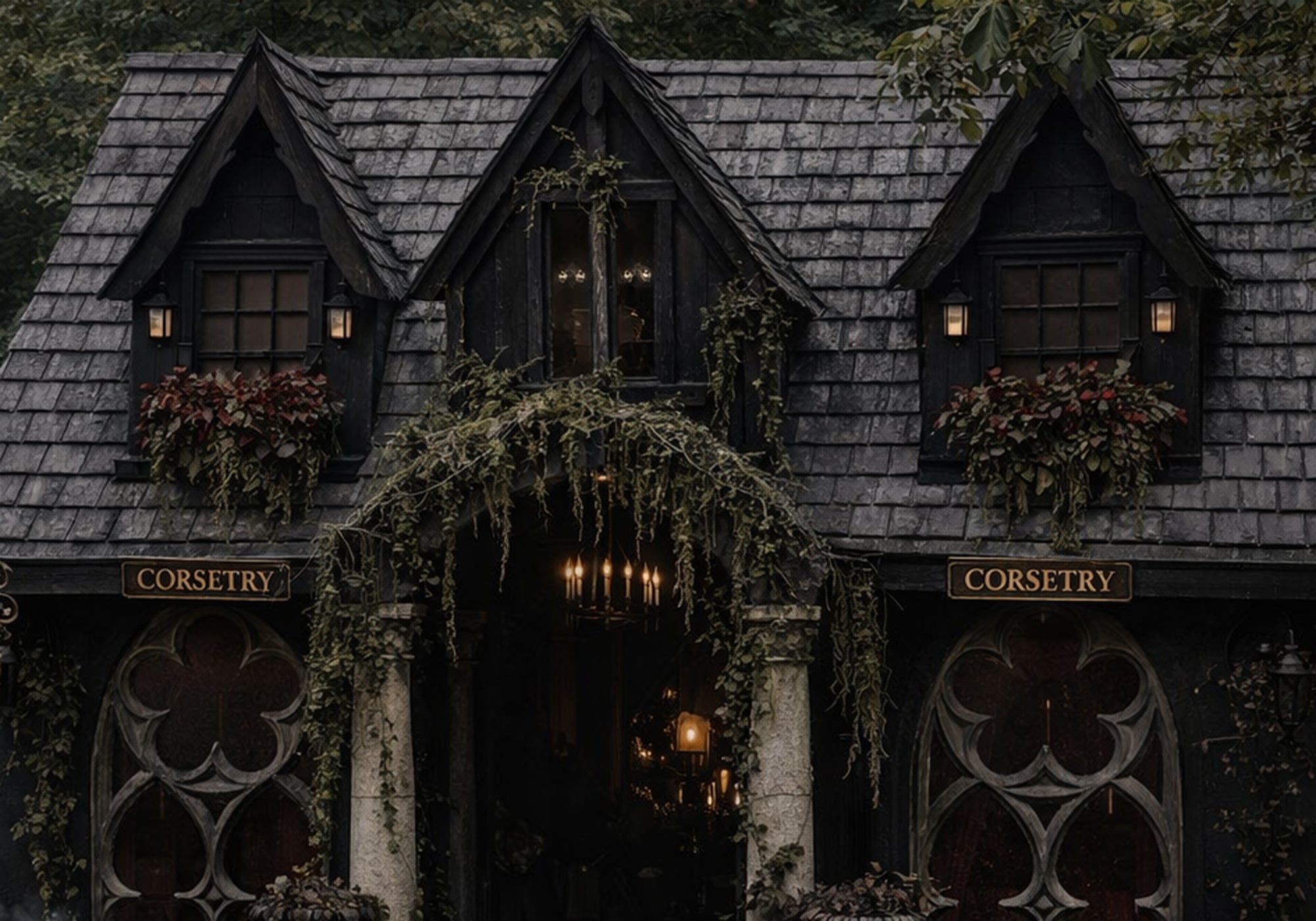
Where Immortelle is concerned with form, lineage, and endurance, Madame Mortelle inhabits what lies beneath — the ritual, the memory, and the unseen forces that bind objects to meaning. She is the shadow house: quieter, darker, and unconcerned with approval.
Madame Mortelle exists where adornment becomes talisman.
A House of Ritual and Relic
The work of Madame Mortelle draws from historical superstition, folklore, and ceremonial dress — not as costume, but as language. Every object is created with intention, not symbolism applied after the fact. Corsets, jewelry, and relics are conceived as charged forms, shaped through repetition, patience, and restraint.
Here, beauty is not decorative.
It is deliberate, sometimes severe.
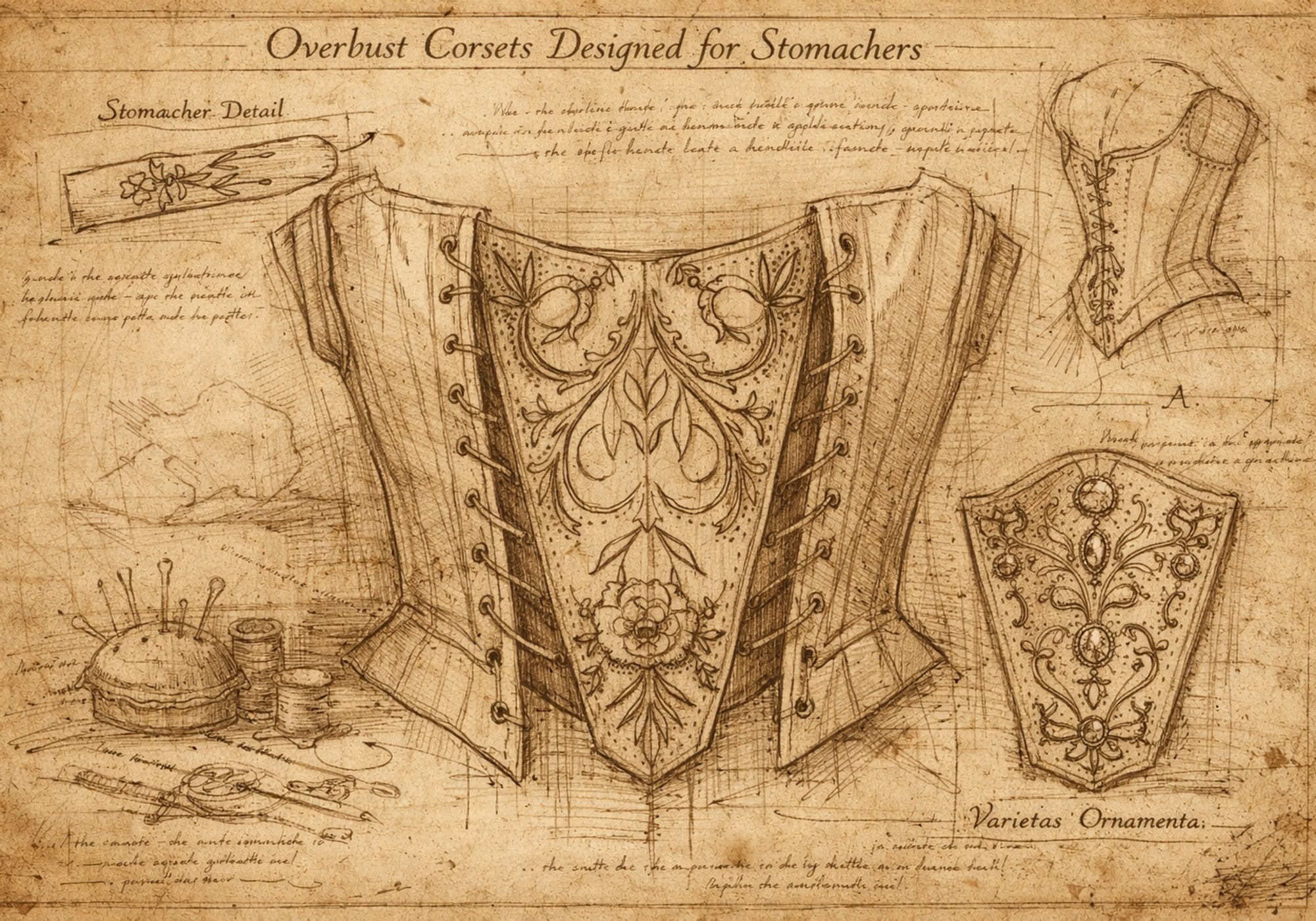
Garments are designed to feel invoked rather than styled. Open-front corsetry, exposed lacing, and visible construction are retained not for transparency, but for honesty — a refusal to disguise how power is built.
Madame Mortelle pieces do not seek to just flatter.
They seek to also hold.
Materials With Memory
Nothing used within the house is neutral.
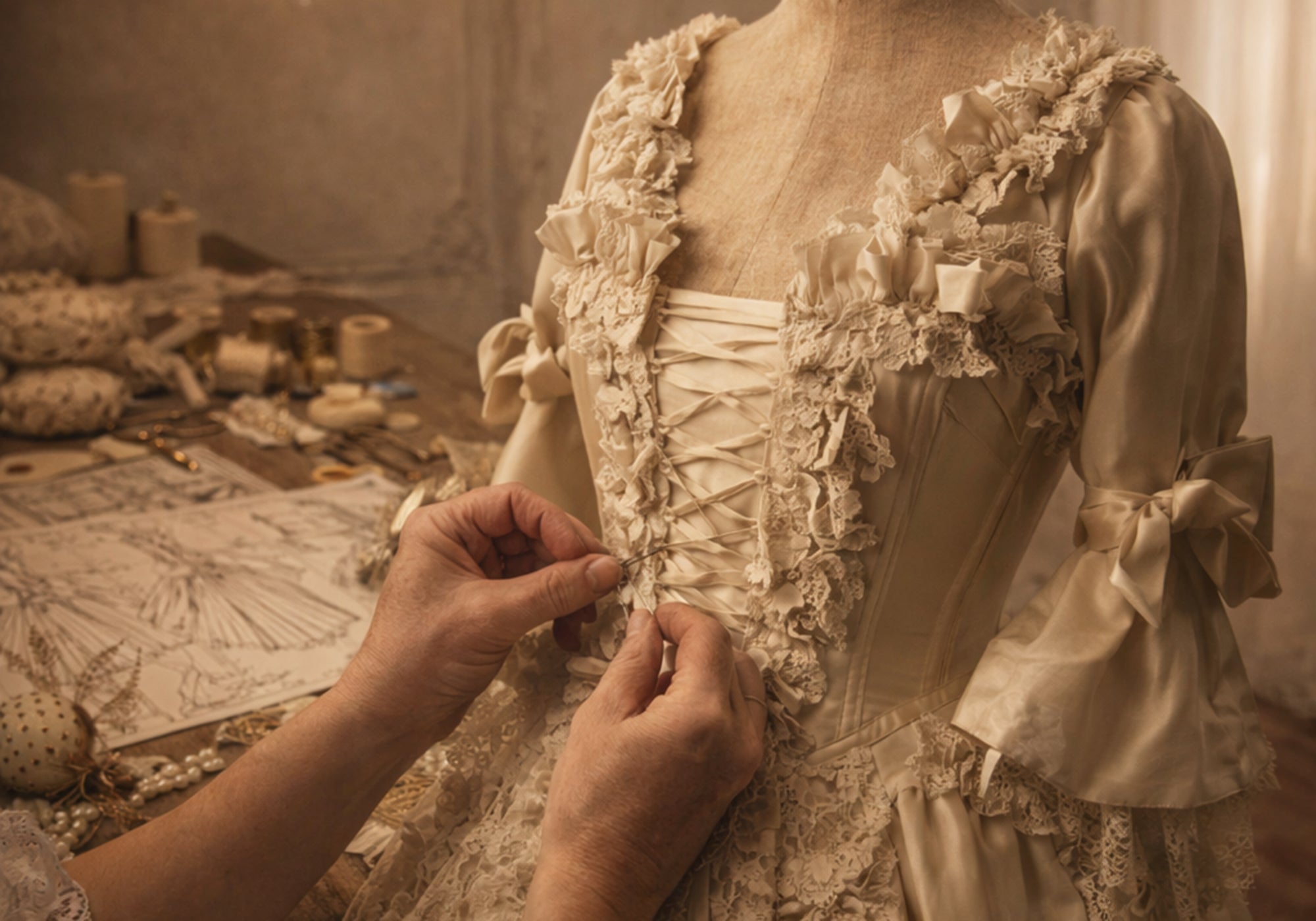
Textiles are chosen for texture, weight, and mood — lace that reads like mourning, velvets that absorb light, fabrics that feel aged rather than pristine. Color is restrained, often dark, and selected for its emotional gravity rather than visual impact.
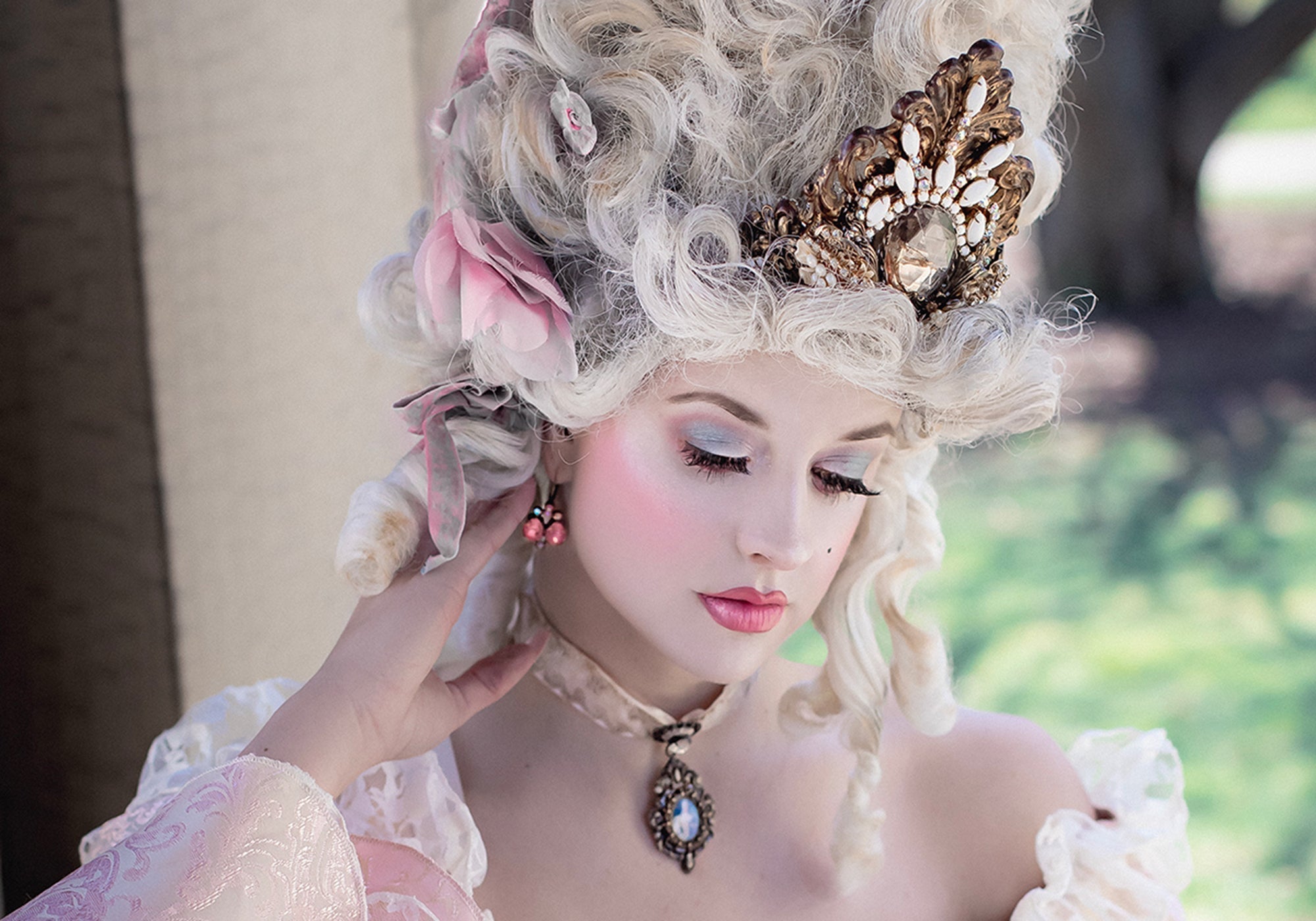
Jewelry is assemblage in its truest sense: antique and reclaimed components, repurposed fragments, and materials that carry visible history. Scratches, patina, and irregularity are not corrected — they are honored.
Each piece is allowed to remain imperfect, because perfection erases memory.
Objects of Use, Not Display
Madame Mortelle does not create novelty objects.
She creates things meant to be worn, handled, and returned to.
Corsets are constructed to shape and contain. Jewelry is weighted, tactile, and grounding. Relics are meant to be kept close, not explained. These pieces are not designed to be consumed quickly or understood immediately.
They reveal themselves over time.
This is not fashion as spectacle.
It is fashion as private ritual.
A Counterpart, Not an Alter Ego
Madame Mortelle is not Immortelle made darker.
She is Immortelle turned inward.
Where Immortelle concerns herself with public form — ceremony, silhouette, and presence — Madame Mortelle concerns herself with the private: mourning, protection, devotion, and inheritance. She exists for those moments that are not witnessed, not photographed, and not performed.
The two houses share discipline, handwork, and intention.
They diverge in purpose.
The Nature of the House
Madame Mortelle is for those who understand that adornment can be armor, that clothing can hold memory, and that objects can become companions rather than accessories.
She does not ask to be understood.
She asks to be kept.
This is a house built for the long dark —
for women who do not discard what has weight,
and who recognize power not in display,
but in what endures quietly.
This is Madame Mortelle.
A house of ritual.
A keeper of relics.
A place where nothing is innocent —
and nothing is accidental.