The Early Years of Immortelle: 2017 - The Year of Luna
Luna entered Immortelle at the precise moment permanence became necessary.
By the end of the 2016 season, it was clear that the work could not remain provisional. What had begun beneath an acorn tree—romantic, exposed, and physically demanding—had revealed both its beauty and its limits. If Immortelle was to return, she could not do so lightly. The work required a body of its own.
Luna appeared not as a solution, but as recognition.
I was told that she began her life as a sheep herder’s wagon, crafted in Wyoming around 1889. She was built to shelter a young boy—no more than nine years old—who moved alone through winter terrain tending sheep. In an era that demanded vigilance early, Luna was designed for endurance rather than comfort, for protection rather than ornament. She was not made to travel quickly. She was made to remain.
It is said that the boy’s spirit never fully left her.
Whether history, inheritance, or something quieter, Luna carries presence. Within her remain a few small objects—a pipe, an old coin—kept rather than displayed. And there are moments that resist explanation: the sudden scent of incense when none is burning, brief laughter with no source, a sense of company that feels familiar rather than unsettling. Luna does not feel haunted. She feels inhabited.
When she came into my care, Luna was structurally restored but unfinished in spirit. Someone before me had done the work of preservation; my task was translation. Making her Immortelle was no easy undertaking. It required patience, vision, and restraint.
Every element that shaped Luna’s interior had been gathered long before she arrived. Pieces found during years of travel—some from France, others from places that simply felt right—had been purchased without a clear purpose at the time. I did not know why I was collecting them. Luna did. Even before we had met.
Her hardwood floor was reclaimed from a house built in the 1880s, worn smooth by time. Her tin roof was salvaged from an antique structure, already weathered and honest. Nothing was new for the sake of novelty. Everything carried a prior life.
The side window—one of Luna’s defining features—was conceived as more than a point of sale. I envisioned it as a rolling theatre: a framed moment of presentation, where the work could be witnessed rather than merely offered. Inside, the window became a testament to that idea, hand-painted as a miniature stage inspired by antique French paper theatres (théâtres de papier or théâtres d’enfants)—decorative toy theatres once used to house marionettes and small performances. These were not toys in the modern sense, but instruments of imagination and spectacle, designed to transform viewing into experience.
Luna herself became such a theatre.
Her exterior was hand-painted by a local artist who spent countless hours translating Immortelle’s language onto her surface. Layer by layer, Luna found her voice. She was no longer a wagon that held objects—she became a presence that framed them.
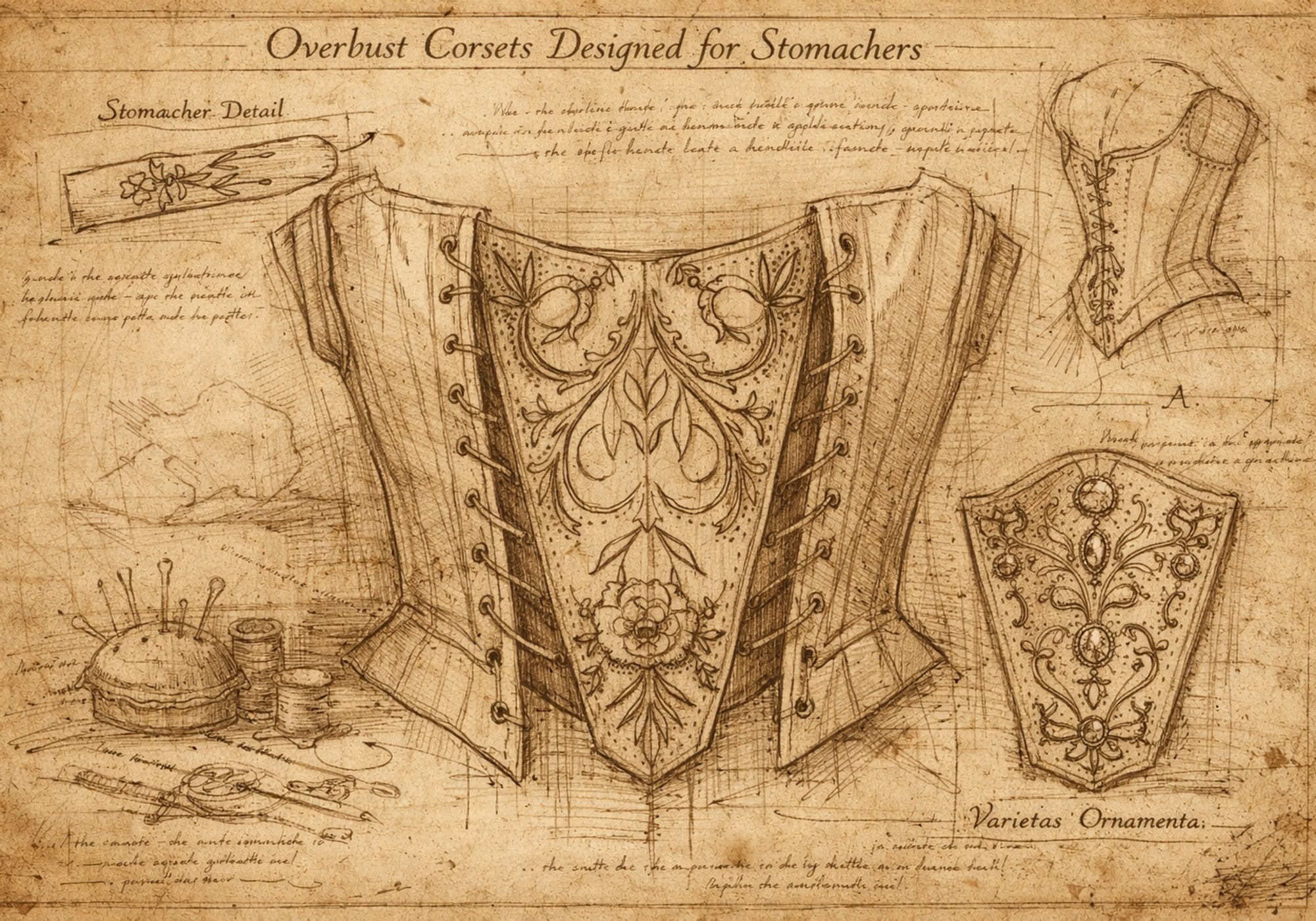
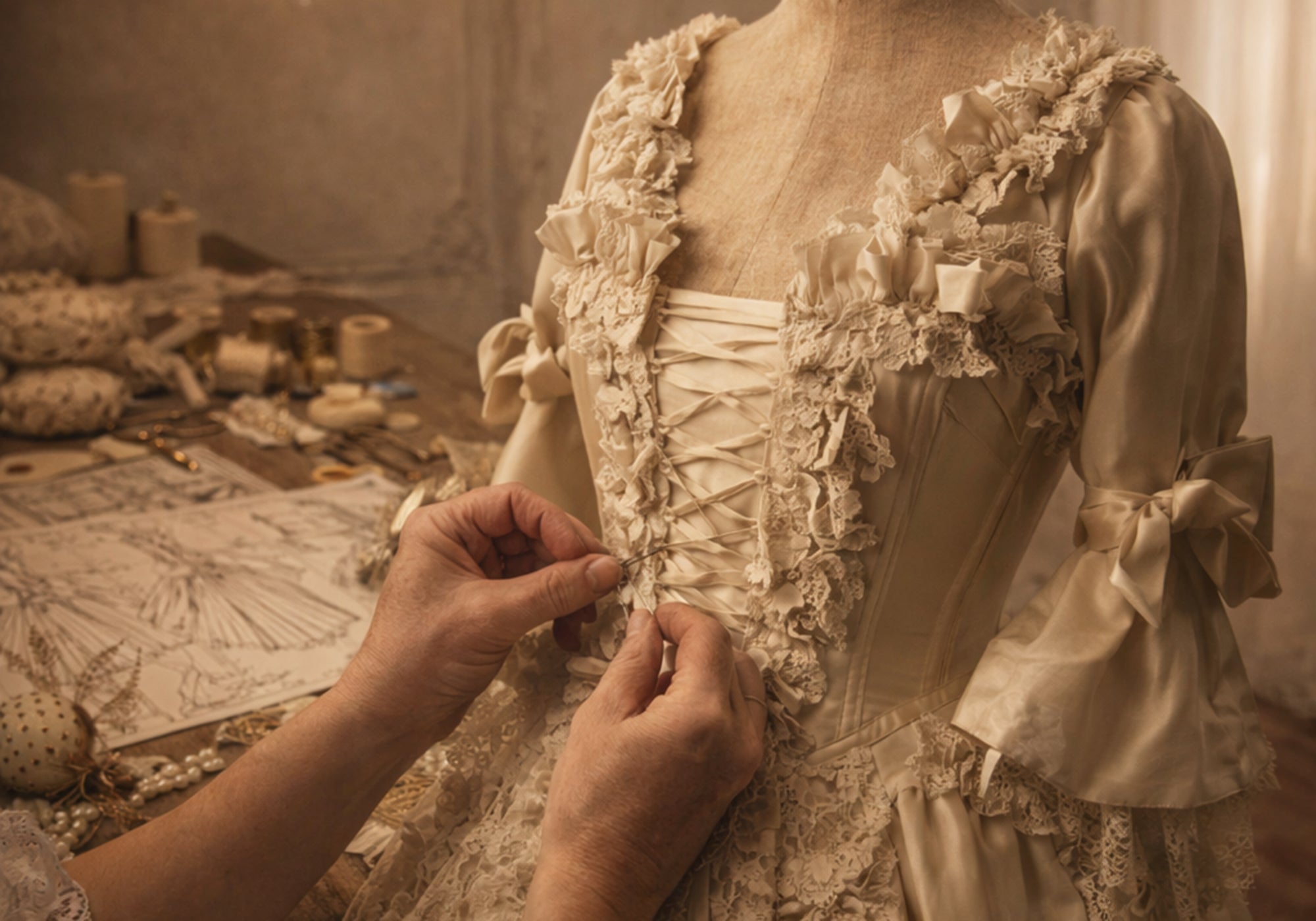
It was within Luna, during that single season in 2017, that the dresses first appeared.
At the time, I was not designing dresses to sell. My mannequins stood undressed beneath the jewelry, and I wanted visitors to better envision how the pieces might live on a body, in context. I began sewing dresses simply to clothe them—atmosphere rather than product, setting rather than strategy.
I was unprepared for what followed.
People stopped not only for the jewelry, but for the silhouettes. They asked about the dresses before they asked about the necklaces. They wanted to know if the garments were available, if they could be worn, if they could be theirs. Again and again, the same question surfaced—unexpected and insistent.
Those first dresses were not planned. They were instinctive. Shaped by hand, informed by history, and built without permission. And yet, they spoke with clarity.
After the season ended—when Luna rested and the quiet returned—I understood what had happened.
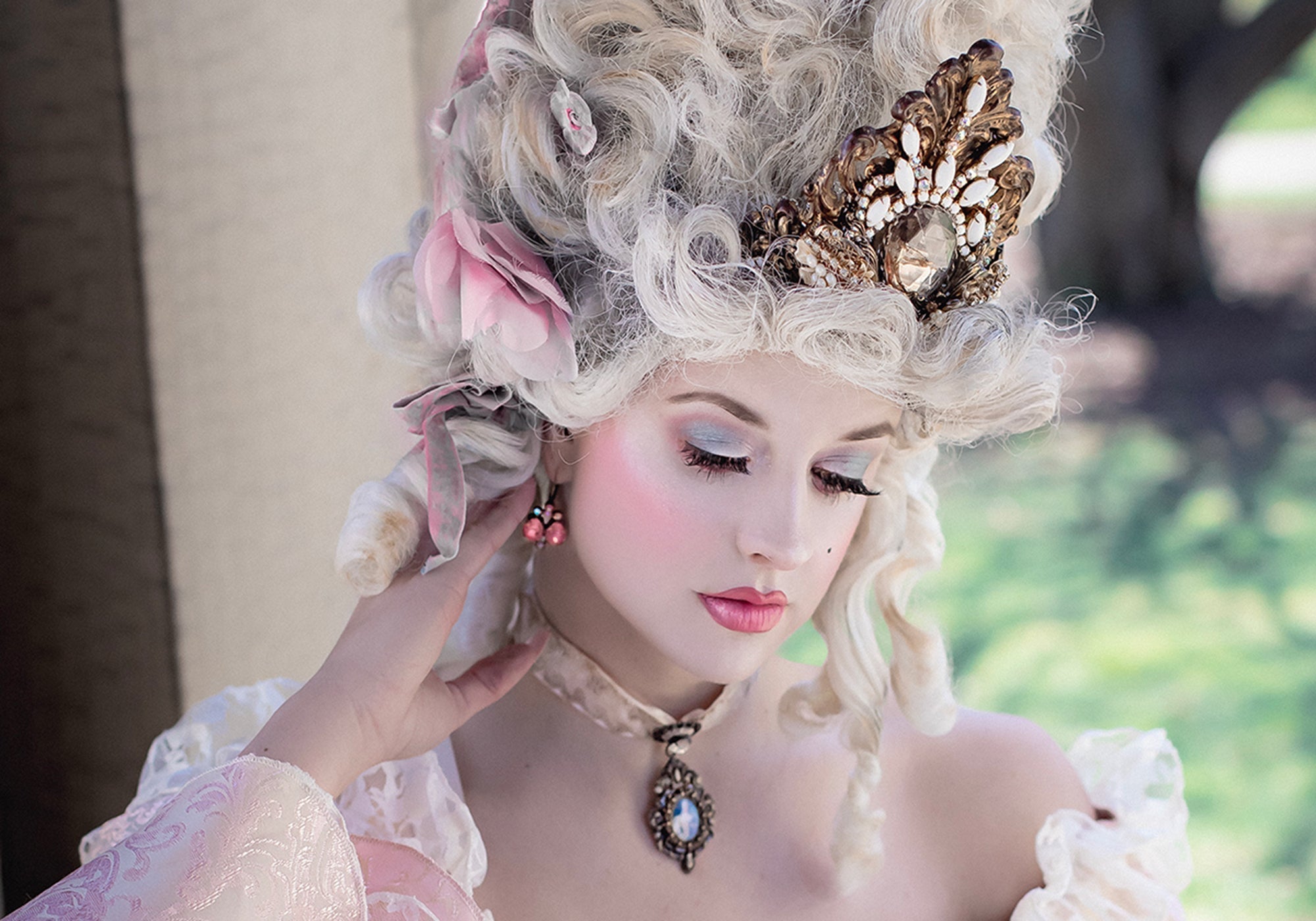
The jewelry had found its body.
That winter, I began the search for a sewing house to help translate what had emerged instinctively into something sustainable. Not to replace the handmade, but to protect it. The garments had not displaced the jewelry. They had revealed its future.
Luna was used for only one season. But that season was enough.
With her, the work stopped disappearing at dusk. It remained visible. It gained continuity. It learned what it meant to be housed. Luna did not ask to be permanent—only to serve when called.
And when her purpose was fulfilled, she rested.
The year of Luna did not last long.
But she changed everything...
— The Immortelle Chronicle continues - 2018