The Anastasia Corset Dress in Red Brocade as Pirate Attire
A Study in Authority, Romance, and the Sea
The image of the pirate has long been misunderstood as theatrical or lawless, when in truth much of historical pirate dress was rooted in practical authority, naval hierarchy, and personal presence. The Anastasia Corset Dress lends itself naturally to pirate styling because it reflects the same principles that defined maritime dress in the late 17th and early 18th centuries: structure, adaptability, and command.
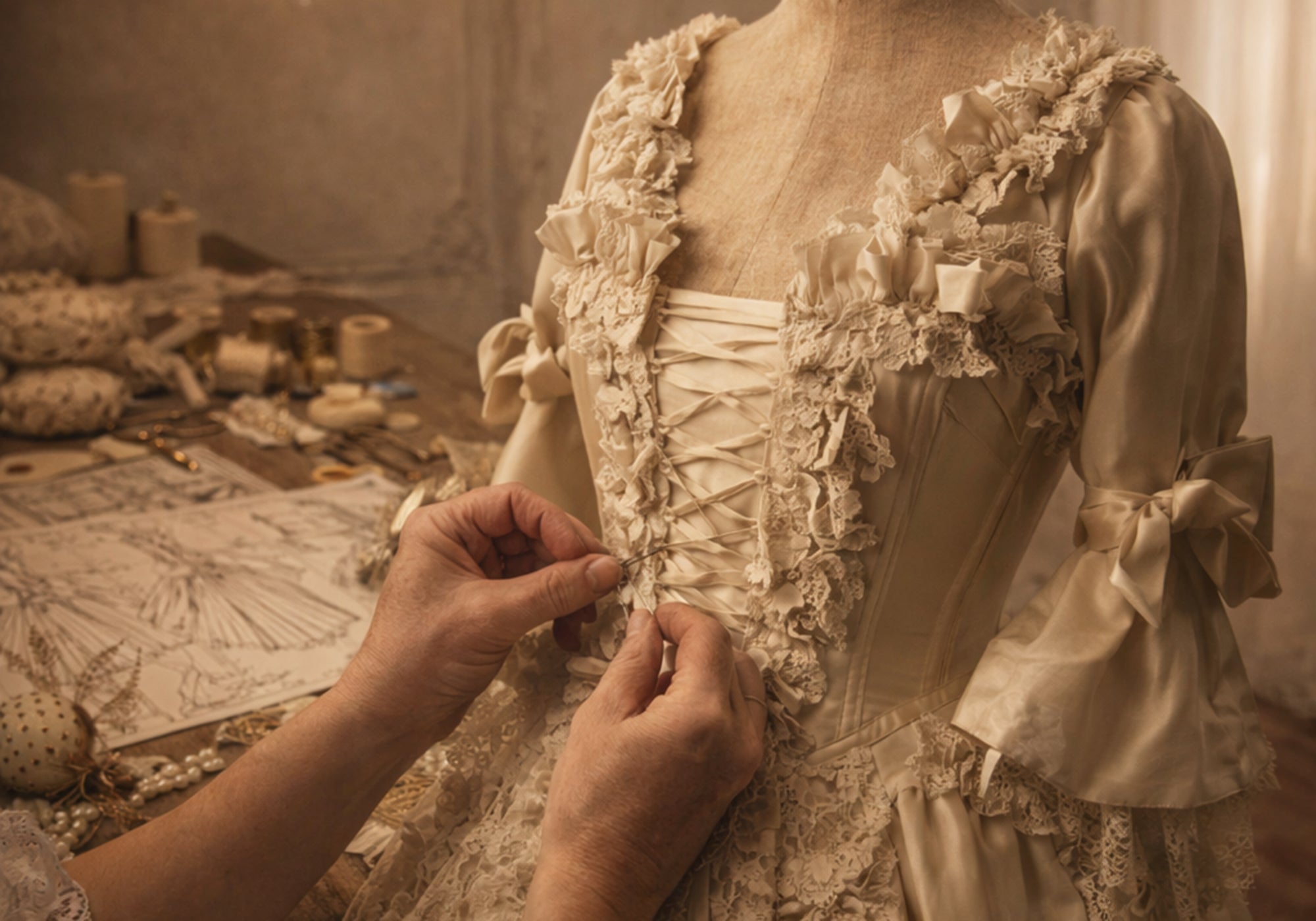
Unlike novelty pirate costumes, historical pirate attire often borrowed directly from European court and military dress. Officers, privateers, and wealthy merchants at sea wore structured garments, corseted waistcoats, and richly colored textiles that conveyed status even beyond land. The Anastasia Corset Dress echoes this lineage through its integrated corsetry, open lacing, and modular design — all elements that align seamlessly with authentic pirate interpretation.
Color, Power, and the Pirate Silhouette
Deep colors such as red, black, green, and brocade-patterned textiles were historically associated with authority, visibility, and wealth. Red in particular was worn by naval officers and mercantile elites, signaling command and presence. When styled as pirate attire, the Anastasia Corset Dress transforms these colors into a language of confidence rather than ornament.
The structured bodice defines the torso with intention, while the layered skirt allows movement — essential for life at sea or the romantic imagination of it. Unlike rigid ceremonial gowns, the Anastasia’s overdress construction allows the garment to feel adaptable and lived-in, mirroring the layered realities of historical dress.
Modular Dressing: A Historical Advantage
One of the defining strengths of the Anastasia Corset Dress is its modularity. Historically, pirate and naval dress evolved through layering rather than fixed ensembles. Coats, sashes, belts, skirts, and accessories were added or removed depending on weather, function, or setting.
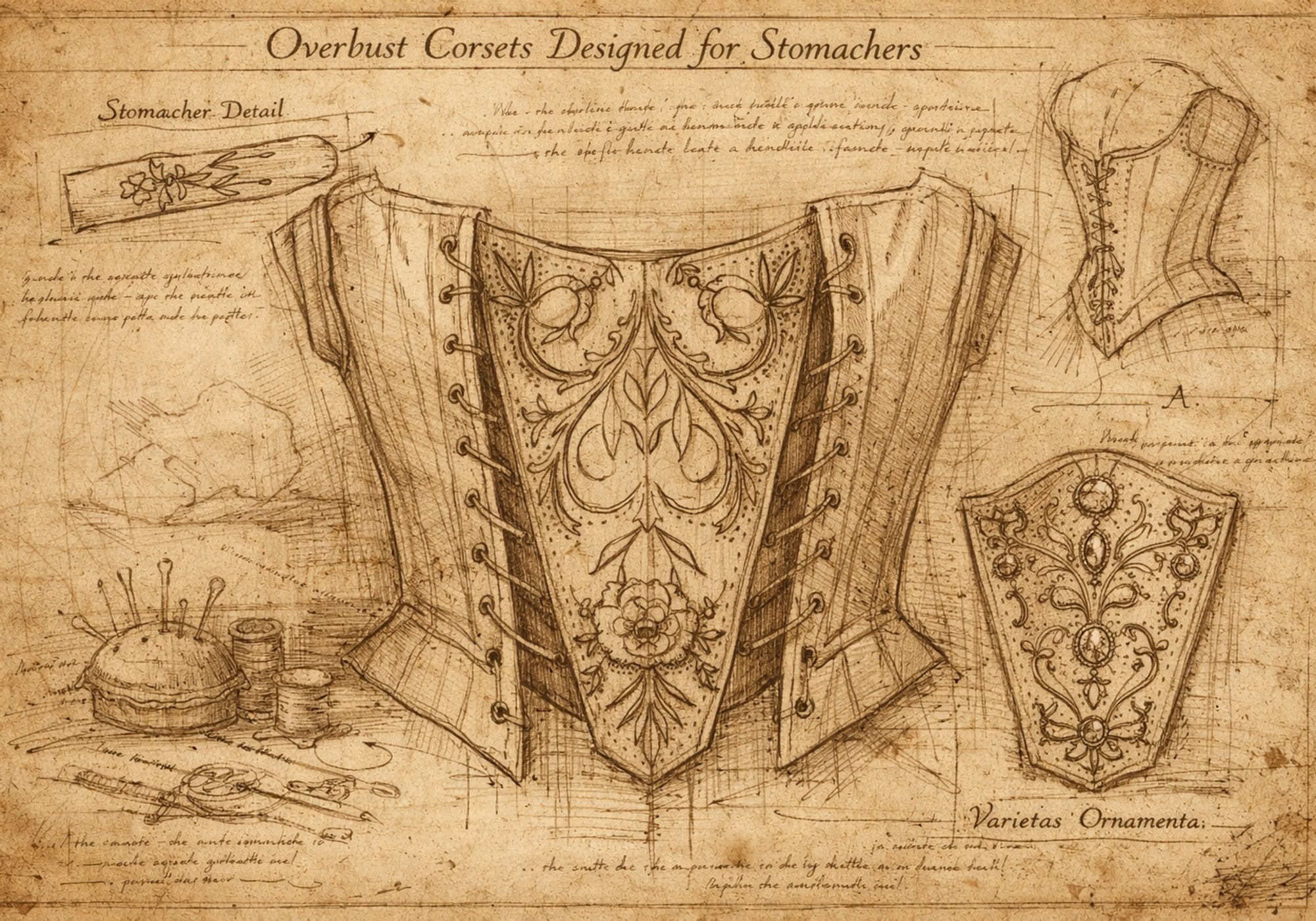
The Anastasia is designed to accept Immortelle stomachers, making it especially well suited to pirate styling. A contrasting stomacher can introduce metallic tones, darker brocades, or textured fabrics reminiscent of maritime ornamentation. When paired with boots, belts, coats, or tricorn hats, the dress becomes unmistakably pirate — without ever losing refinement.
Skirts are intentionally offered separately, allowing wearers to choose fuller silhouettes with panniers or crinolines, or simpler underlayers for ease and movement. This mirrors historical practice, where garments adapted to the wearer rather than dictating form.
Pirate Romance Without Costume
The Anastasia Corset Dress occupies the space between historical authenticity and personal expression. It is not costume, nor is it theatrical excess. Instead, it allows the wearer to inhabit the pirate archetype as it once existed — confident, commanding, and unmistakably composed.
This makes the Anastasia ideal for:
Renaissance festivals
Pirate gatherings and privateer events
Historical balls with maritime themes
Styled photoshoots and editorial settings
Romantic interpretations of sea-bound authority
Rather than imitating pirate imagery, the Anastasia supports it, allowing the wearer to create a look rooted in history rather than fantasy.
Dressing the Pirate, Immortelle Style
At its core, pirate dress was about presence — not spectacle. The Anastasia Corset Dress honors this tradition through disciplined structure, thoughtful construction, and restrained ornament. It invites interpretation without prescribing it, allowing the wearer to decide how boldly the pirate narrative is expressed.
This is pirate dressing as it should be:
Grounded in history.
Shaped by intention.
Completed through personal styling.