The Anatomy of an Immortelle Corset
A corset is not a single element, but a system. At Immortelle, every corset is designed as an architectural garment, composed of interdependent parts that work together to support the body with intention, balance, and longevity.
Understanding the anatomy of a corset allows the wearer to understand not only how it fits, but why it feels the way it does.
The Foundation of Structure
At the core of every Immortelle corset is its internal structure. This structure is responsible for shaping, support, and weight distribution. Boning is placed deliberately, not densely, guiding the torso into alignment rather than compression. Each channel is positioned to encourage lift, stability, and ease of movement, allowing the body to remain supported without strain.
Unlike decorative bodices, the structure of an Immortelle corset is designed to function as the garment’s foundation. It does not rely on hidden layers or additional underpinnings. The corset itself carries the responsibility of support.
The Bodice Panels
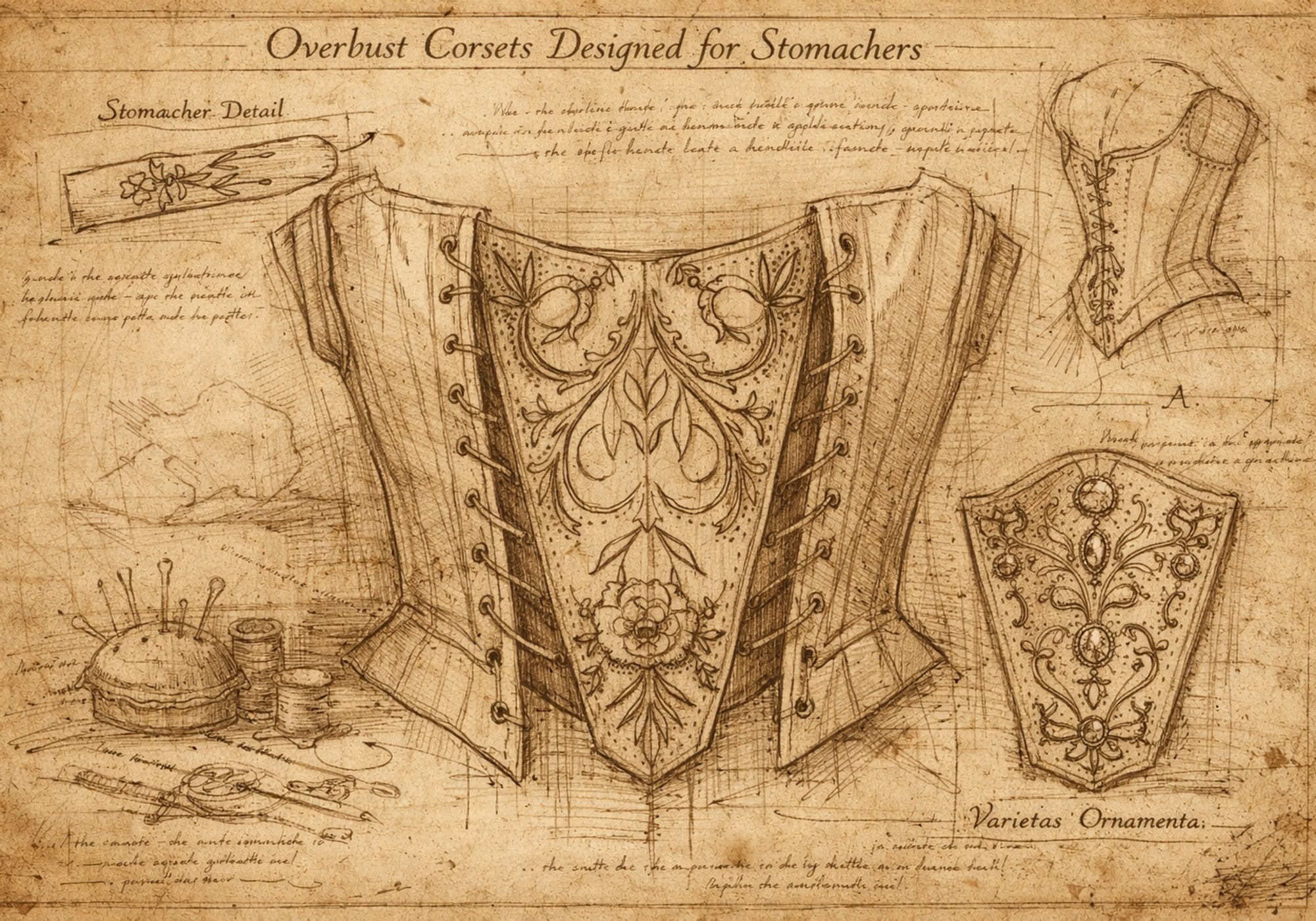
The bodice is composed of multiple shaped panels, each drafted to contour the body rather than flatten it. These panels allow the corset to accommodate curves naturally, creating a silhouette that feels intentional instead of forced. The shaping is achieved through patterning, not pressure.
By distributing shaping across panels, the corset avoids concentrating stress in any one area. This contributes to comfort, longevity, and consistency of fit over time.
Boning as Guidance, Not Constraint
Boning within an Immortelle corset serves as guidance for posture and form, not as a tool for restriction. Each bone is selected and placed based on its role within the garment. Together, they create a framework that supports the torso evenly, allowing the wearer to move, sit, and breathe naturally.
This approach reflects historical corsetry, where structure was intended to support the body through long periods of wear rather than dominate it.
The Open Front
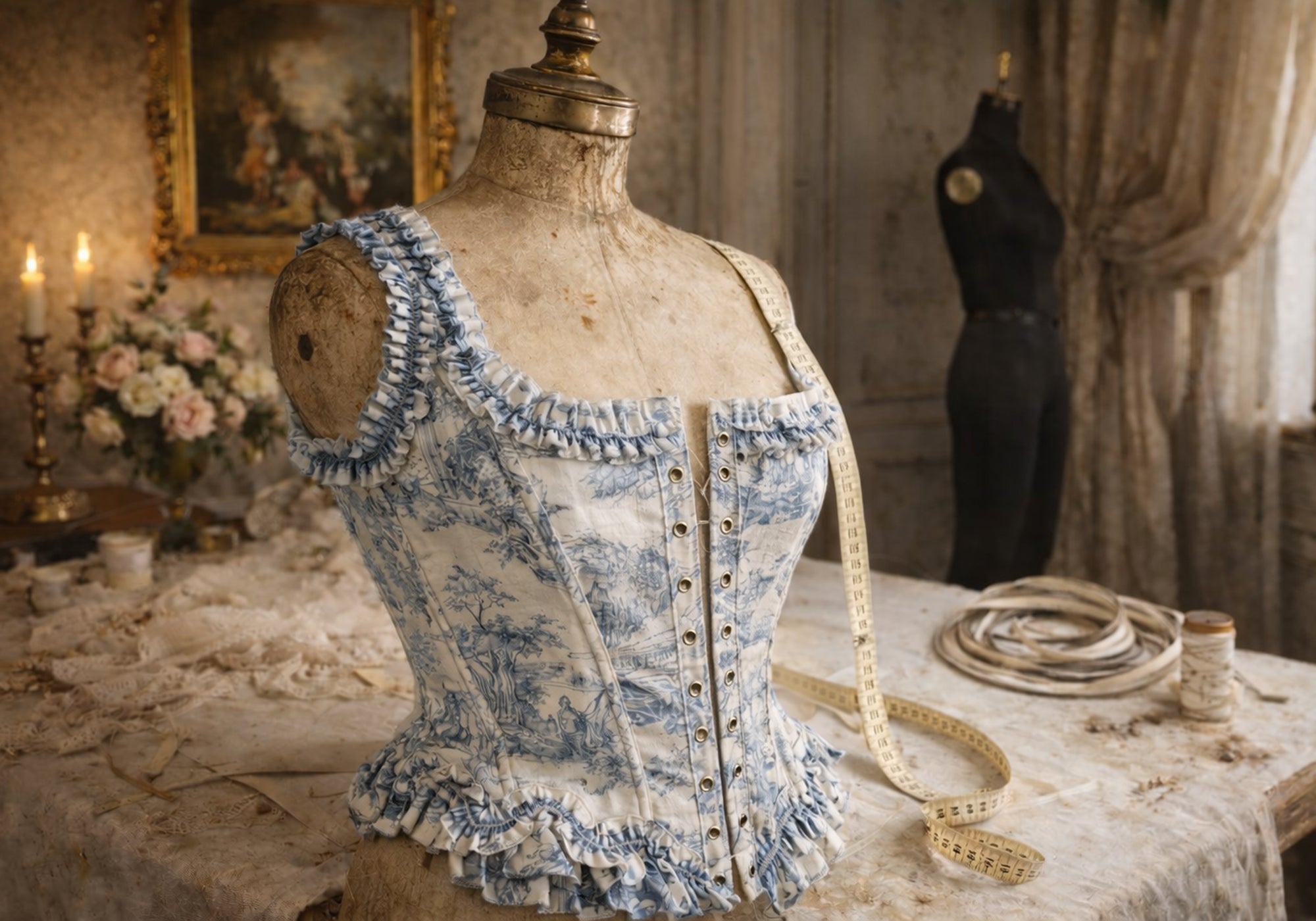
Every Immortelle corset features an open front, allowing the garment to open fully for dressing and adjustment. This design choice acknowledges the realities of modern life while honoring historical construction. An open-front corset allows the wearer to enter the garment thoughtfully, aligning it with the body before lacing.
It also allows the corset to evolve with the wearer over time, accommodating natural changes without compromising its structure.
Lacing and Adjustment
Lacing is not merely a closure, but a method of dialogue between garment and body. Immortelle corsets are laced to fit, not to reduce. The lacing system allows for subtle adjustment, ensuring even tension across the garment and preventing stress on seams or bones.
This adjustability is essential to longevity. A well-laced corset does not demand precision from the body; it responds to it.
The Role of the Modesty Panel
Behind the lacing lies the modesty panel, designed to provide coverage and comfort while maintaining a smooth interior surface. It protects the skin from friction and allows the corset to be worn directly against the body if desired.
The modesty panel is functional, not ornamental, and exists to support wearability rather than decoration.
Integration Into the Garment
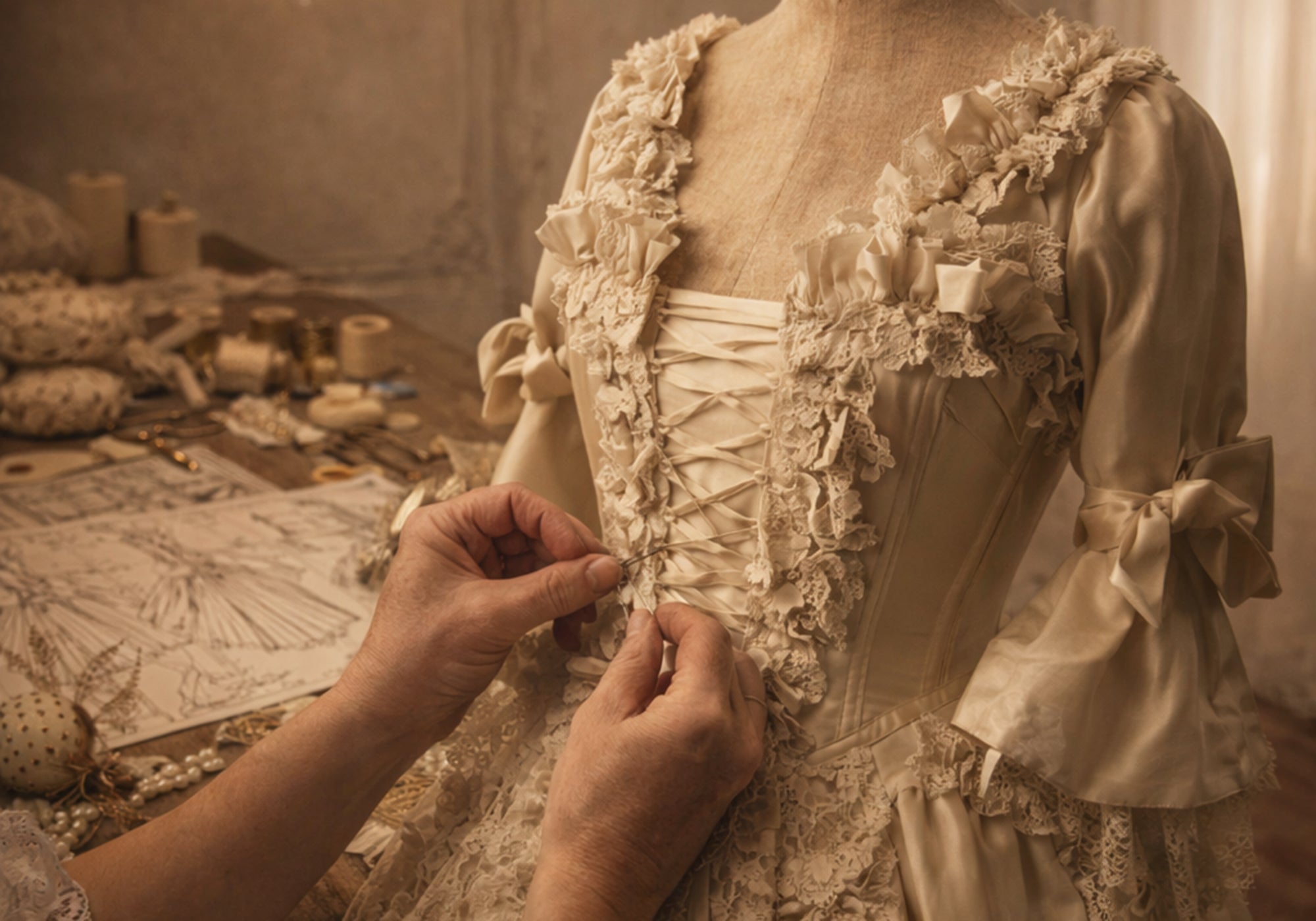
In Immortelle designs, the corset is not an afterthought. It is integrated into each garment as a foundational element. Skirts, sleeves, and outer layers are designed to work in harmony with the corset, allowing the entire piece to behave as one unified system.
This integration ensures that structure and beauty are never in competition.
A Living Garment
An Immortelle corset is designed to be worn repeatedly, returned to, and lived in. Its anatomy reflects a philosophy of dressing that values durability, adaptability, and understanding. When the wearer knows how a corset is built, the garment becomes something more than clothing. It becomes a partnership between craft and body.
At Immortelle, the anatomy of a corset is not hidden. It is honored.