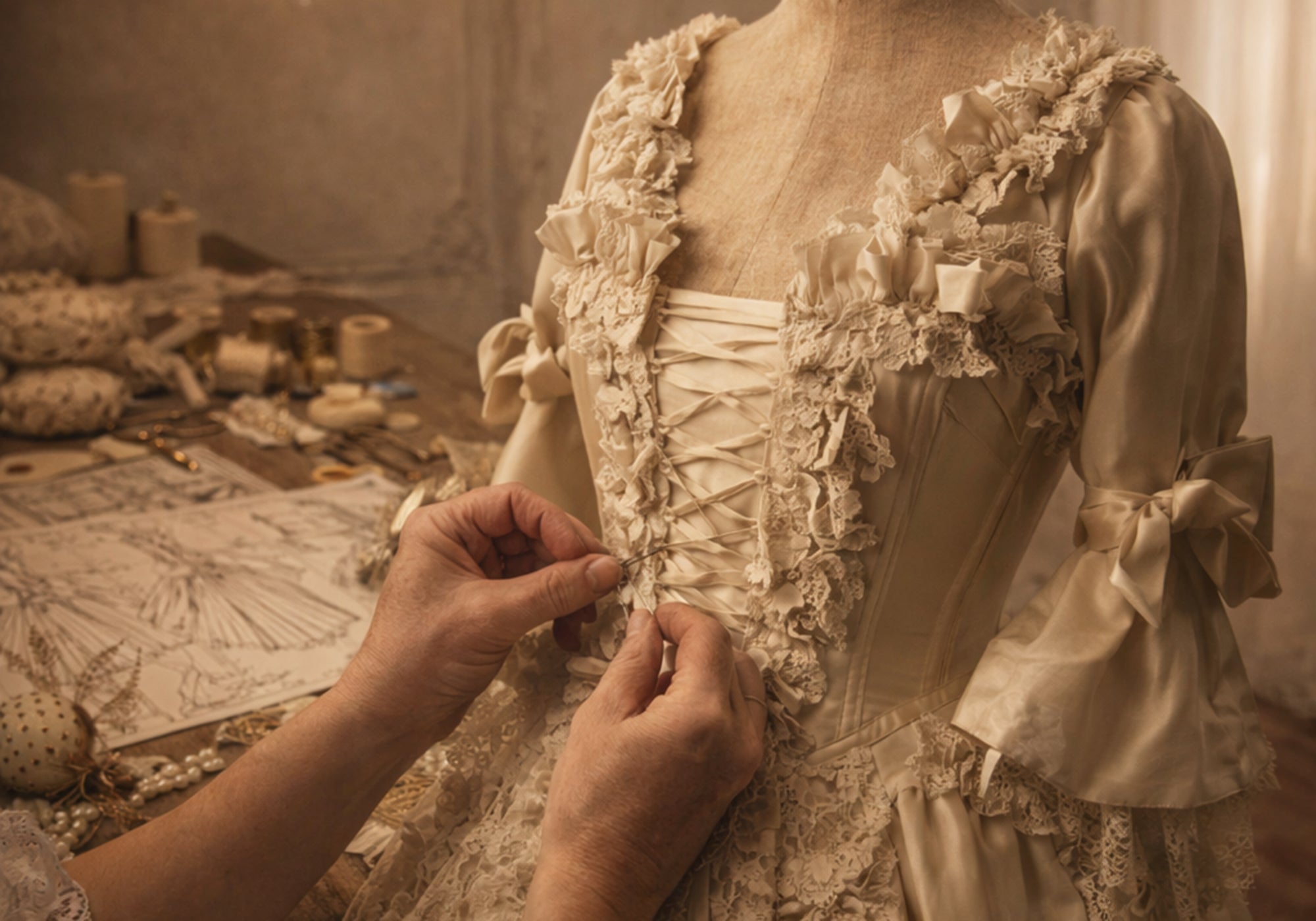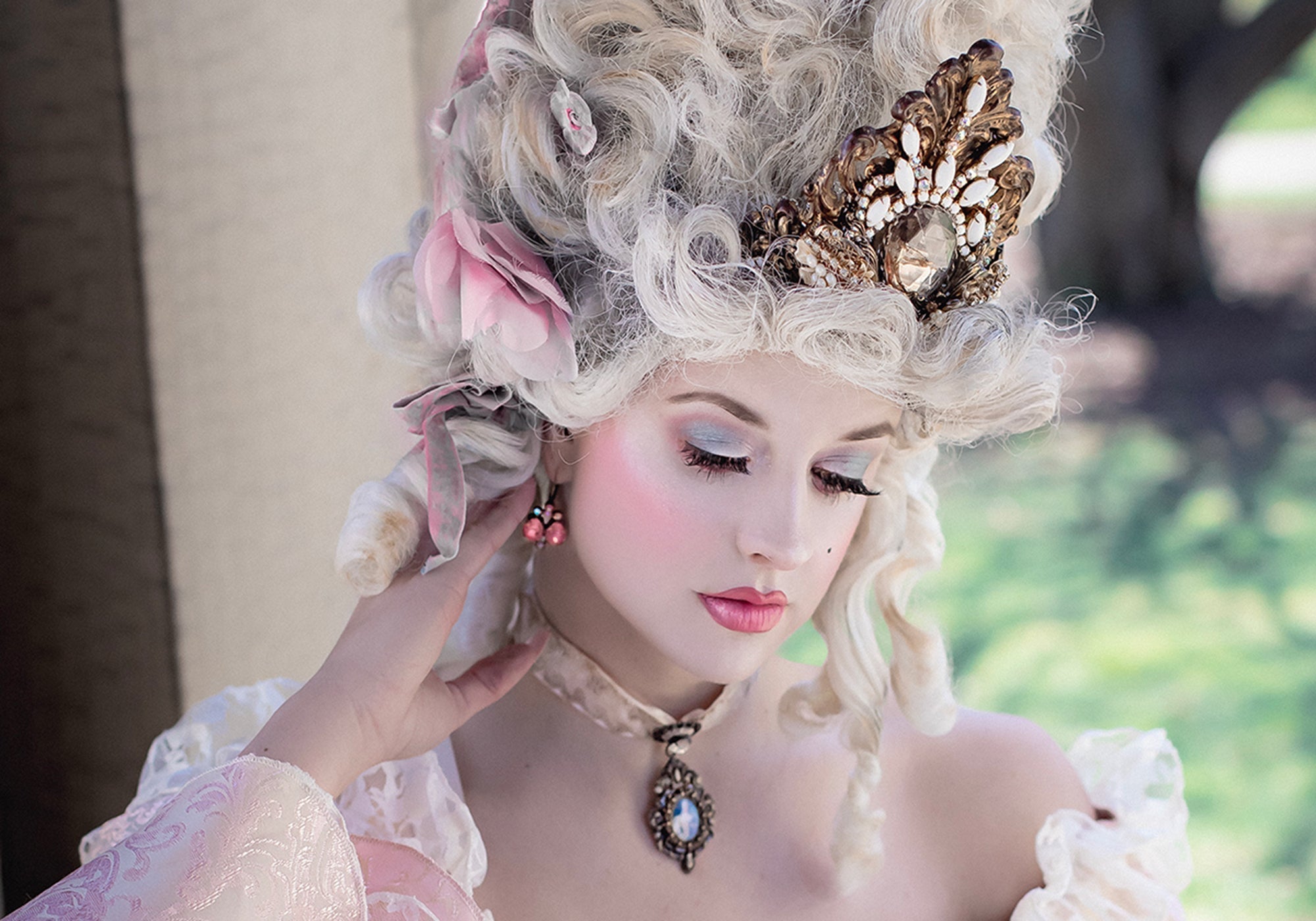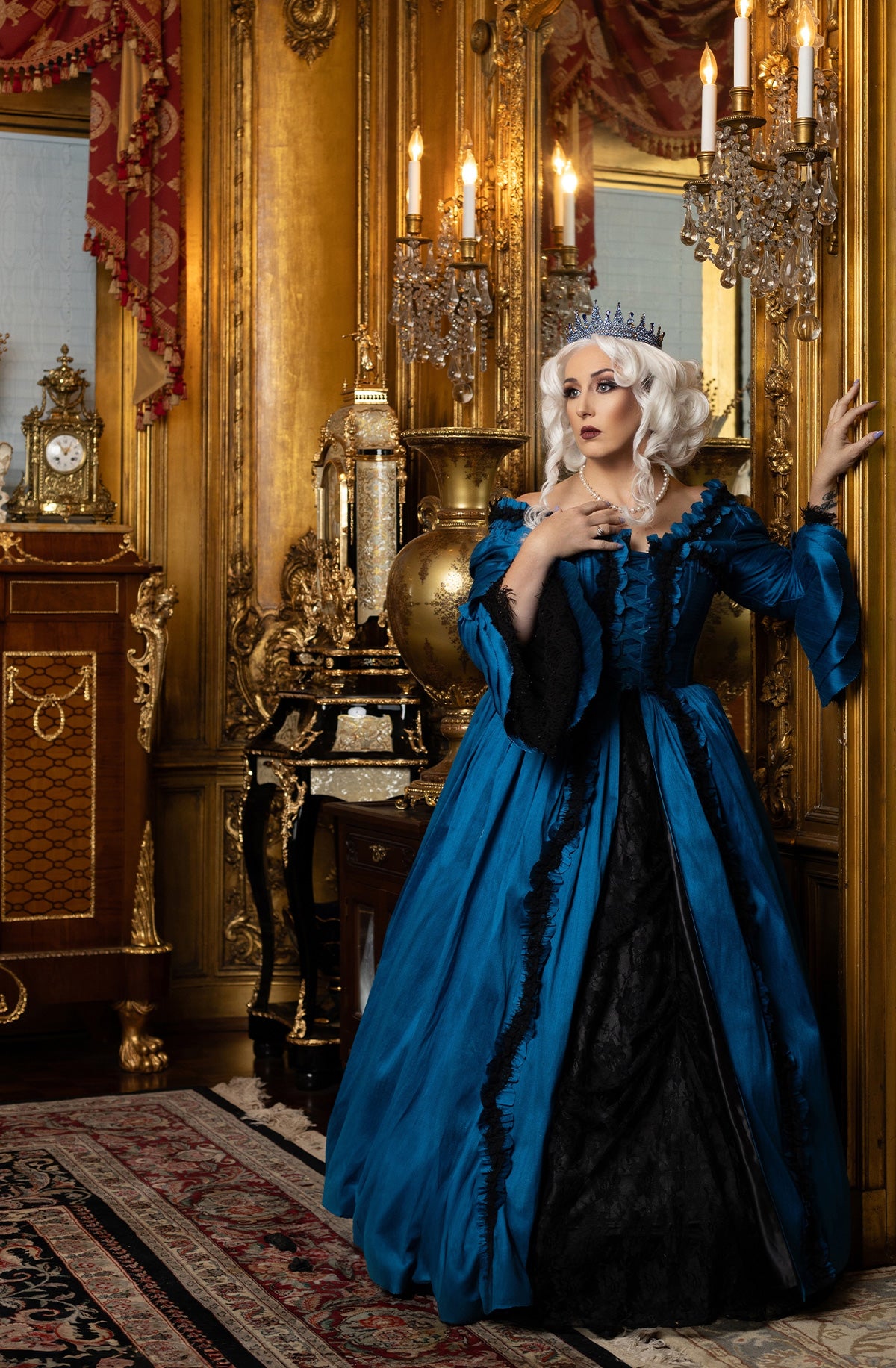
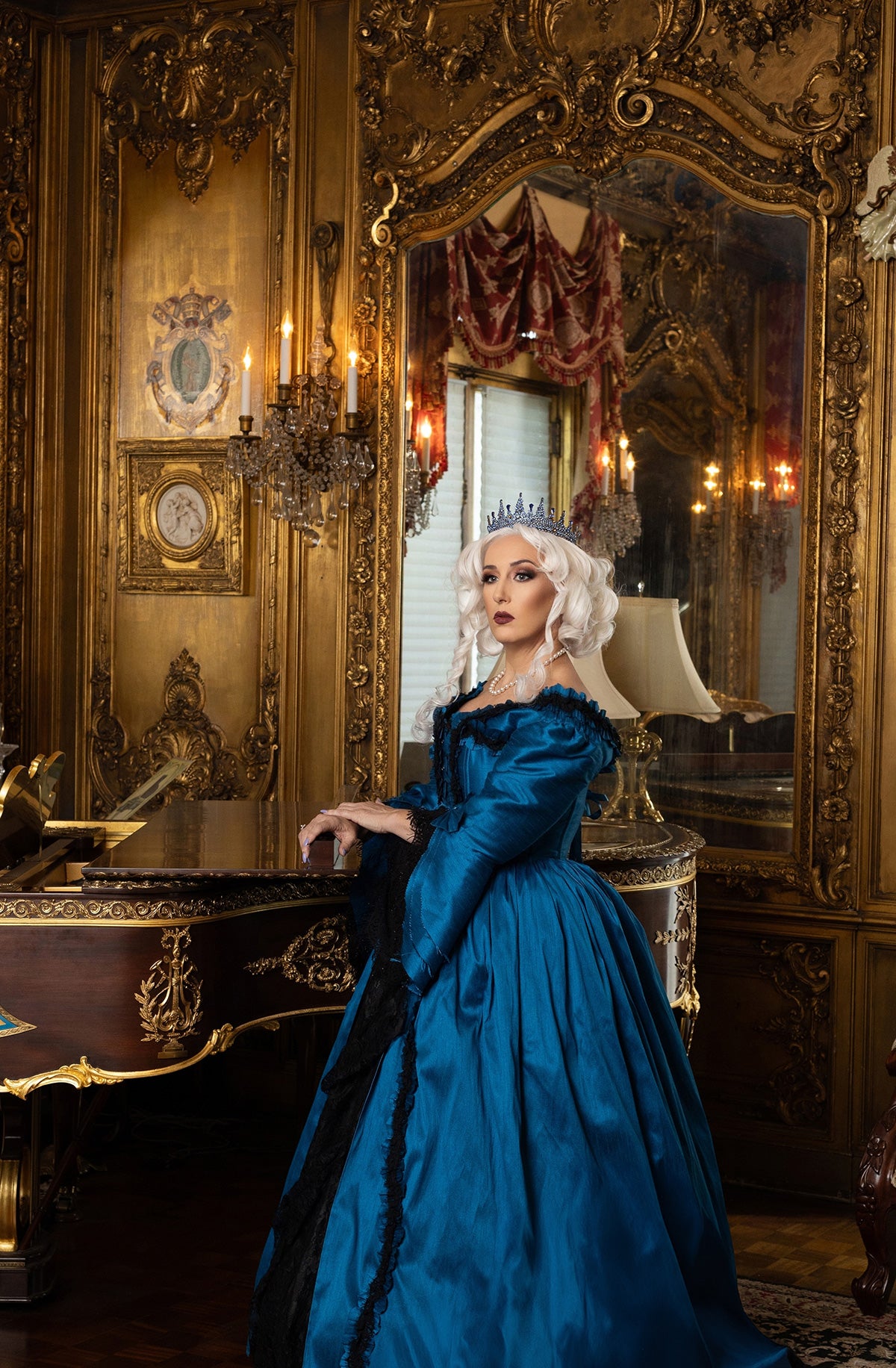
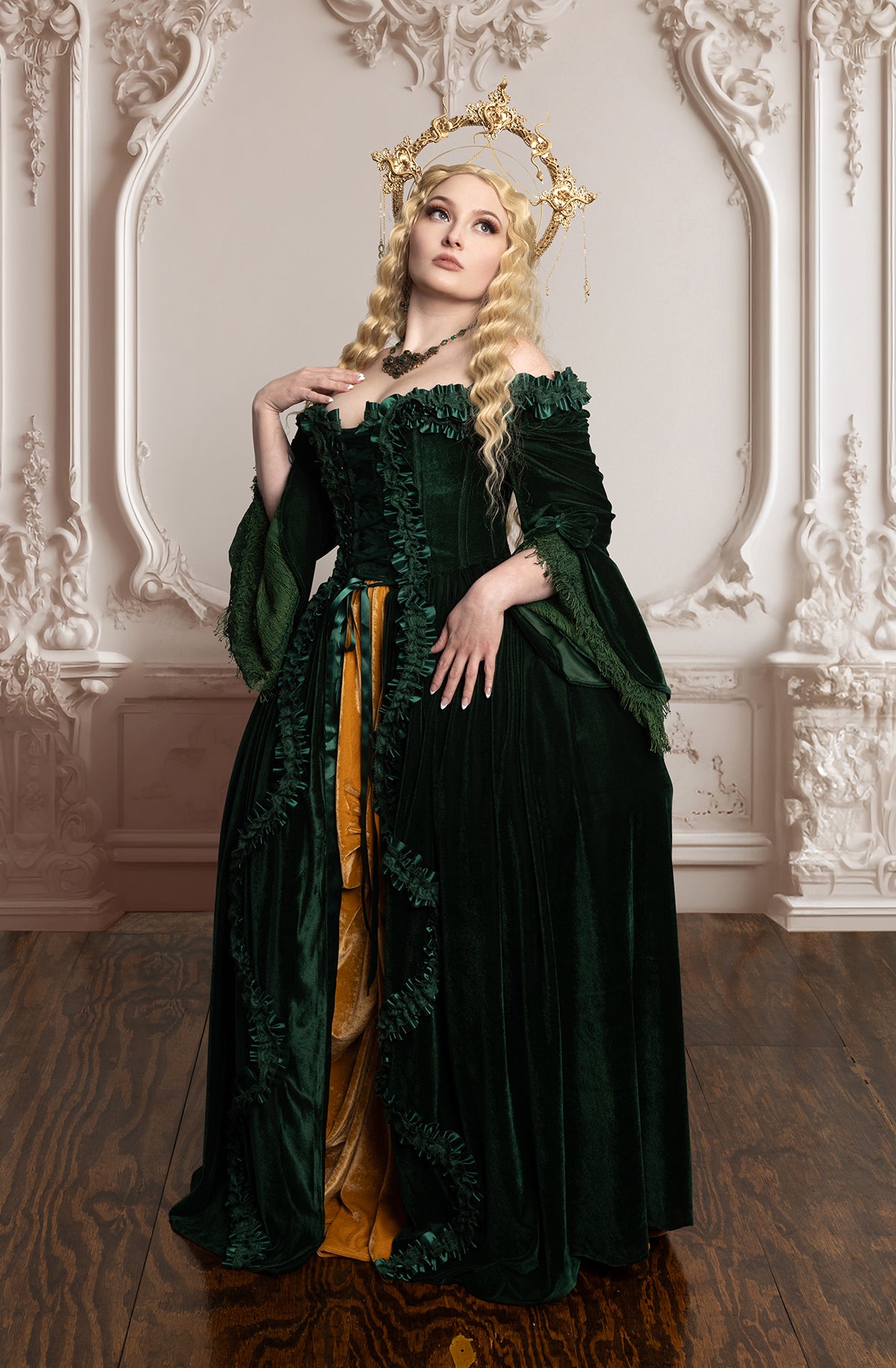
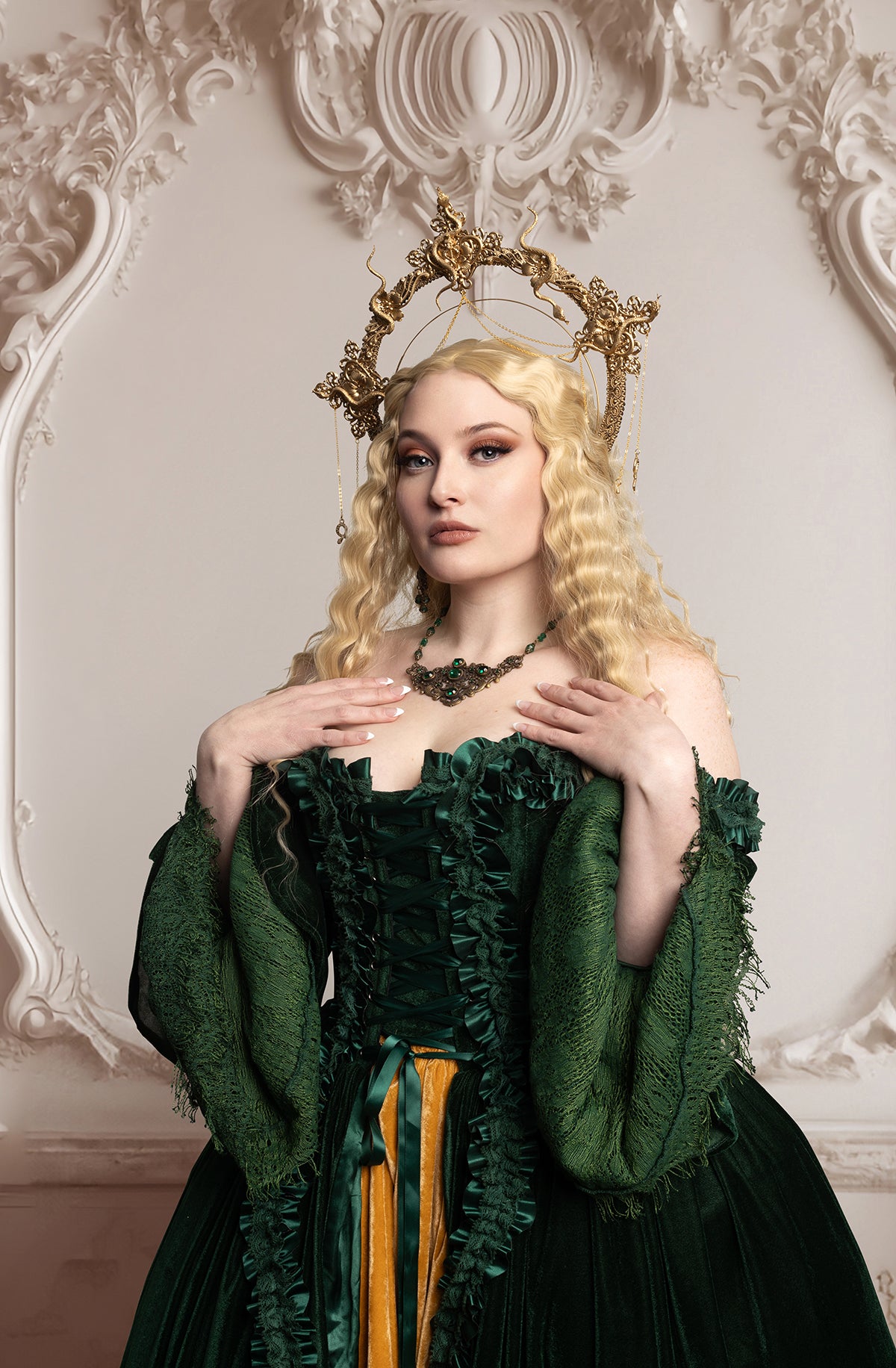
The Marie Antoinette & Robe a la Francaise Corset Gowns of Immortelle are inspired by 18th-century French court dress, where structure, ceremony, and silhouette defined presence. These designs reinterpret historical forms through modern corsetry, combining open-front construction, architectural bodices, and period-inspired proportions.
Influenced by the gowns worn at Versailles and the theatrical elegance of the late Rococo era, each Marie Antoinette & Robe a la Francaise Corset Gown is designed to accommodate historical understructures such as hoops and panniers, allowing the silhouette to present itself as intended—balanced, expressive, and commanding. These are not costumes, but ceremonial garments created for movement, interpretation, and longevity.
From sweeping skirts to structured corset bodices, this collection honors the artistry of Marie Antoinette–era fashion while allowing for personal styling and modern wear. Each gown is designed to inhabit history rather than merely reference it.
Sort by
25 products
Immortelle Bijouterie
The Grimoire of Corsetry
Collected knowledge on fit, form, and the wearing and care of Immortelle
On Choosing Your Immortelle Corset Size
Throughout our atelier writings, we speak often about corsetry as structure rather than restriction — a discipline of balance, posture, and proportion. Choosing the correct corset size follows the same philosophy.
An Immortelle corset is designed to meet the body where it is, allowing shape to emerge through thoughtful construction and proper lacing rather than force. Size selection begins at the natural waist and is refined through fit preference, experience with corsetry, and intended wear. Modesty panels and adjustable lacing are integral to this process, allowing the garment to adapt gradually over time.
In this guide, we build upon our existing corset articles to address one of the most common questions we receive: how to choose the correct Immortelle corset size. We explain what measurements matter most, how much reduction is appropriate, and how an Immortelle corset should feel when fitted correctly — composed, supportive, and steady.
For a deeper understanding of corset structure, lacing technique, and long-term wear, we invite you to explore our full corset archive alongside the fitting video.
Fit & Lacing Your Immortelle Corset
An Immortelle dress is designed to meet the body with intention, not force. Proper lacing is less about tightening and more about balance — allowing the garment’s structure to support, shape, and move with you.
Each piece is meant to be adjusted gradually, honoring the architecture of the corsetry and the natural lines of the wearer. When laced with care, the dress reveals its full silhouette: upright, composed, and effortless in presence.
In our full guide and accompanying video, we walk through the ritual of fitting your Immortelle dress — from first lace to final adjustment — so it may be worn as it was designed to be: with ease, confidence, and authority.
The Care & Preservation of Steel-Boned Corsetry
Immortelle corsetry is crafted with steel boning and structured textiles that shape and support the body; it should be treated as a tailored garment, not an everyday underlayer. Always lace gently and evenly, allowing the corset to mold to you rather than forcing it closed. Avoid excessive tightening.
After wear, allow your corset to rest fully unlaced so the structure may recover its natural form. Store flat or hanging by sturdy ribbons in a cool, dry space away from moisture and direct sunlight. Spot clean and dry clean only when necessary, and never machine wash or submerge. With thoughtful care, your corset will maintain its integrity and beauty for years to come.
The Art of Measurement
Measurement is not an act of judgment — it is an act of understanding. At Immortelle, proper measurement begins with awareness of the body’s natural proportions rather than the pursuit of reduction.
Knowing where and how to measure allows the garment to do its work correctly. It ensures balance in the corsetry, clarity in fit, and comfort over time. When taken with care, measurements become a quiet collaboration between body and structure.
In our full guide, we walk through the art of measurement step by step — how to measure for corsets and corset dresses, where precision matters most, and how these measurements inform the final silhouette.
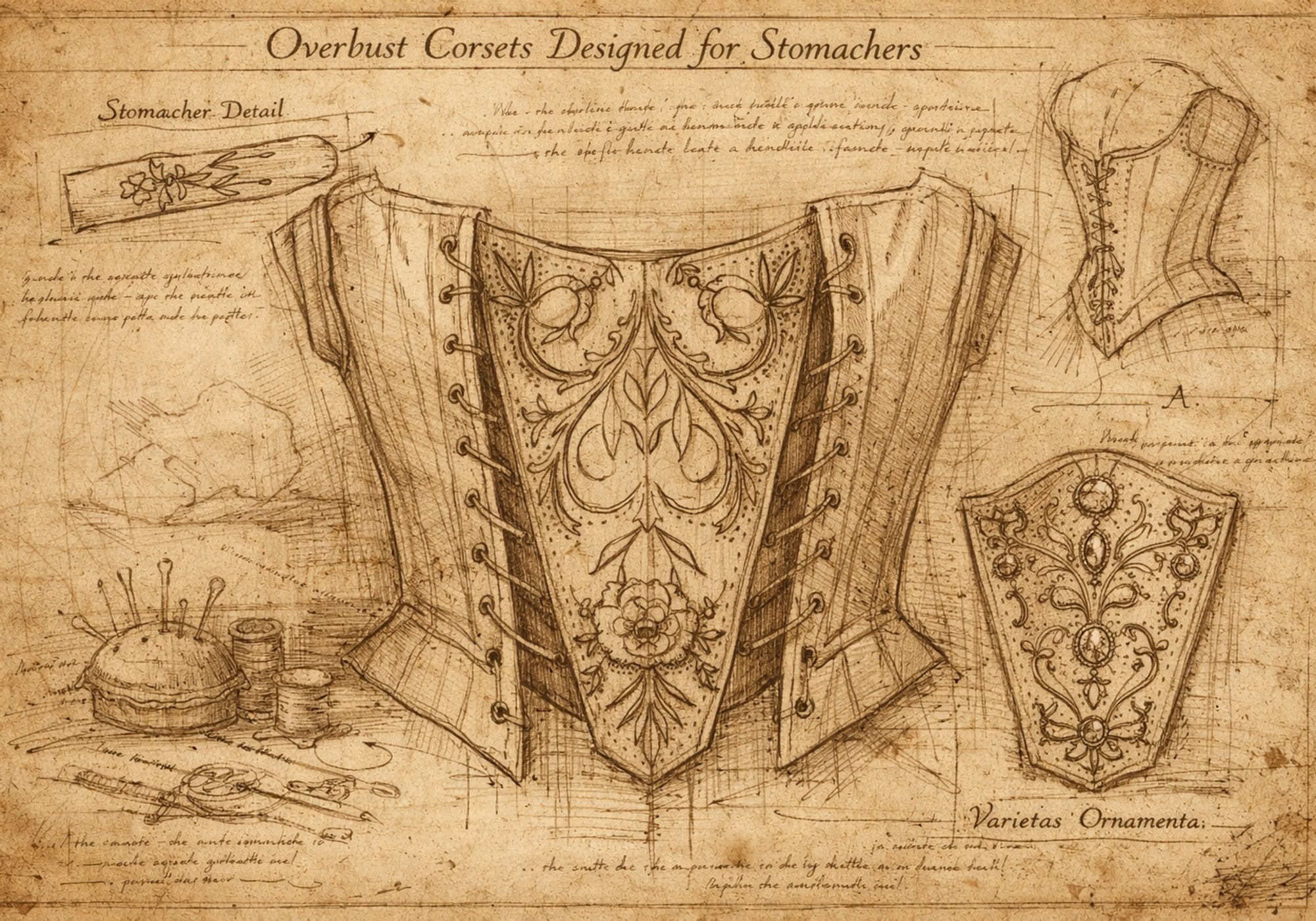
On the Nature of the Stomacher
A stomacher is a ceremonial element of historical dress, traditionally worn beneath an open-front gown or corset overdress. Rather than shaping the body, it serves as a visual focal point — filling the space between laced panels and transforming structure into composition.
In the Immortelle tradition, stomachers are interchangeable works, designed to shift the mood and identity of a garment without altering its silhouette. They allow a single piece to move between restraint and opulence, ceremony and interpretation.
Not all designs accommodate a stomacher. When appropriate, it remains an element of expression rather than necessity.
Read more about the history and use of stomachers in our full article →
Understanding the Silhouette of Historical Dress
The silhouette of a gown is shaped as much by what lies beneath it as by the fabric itself. Hoops and panniers serve different purposes, each supporting the garment in a distinct way.
A hoop skirt creates even volume around the body, forming a full, balanced silhouette. A pannier extends the gown at the hips, emphasizing width and allowing layered panels and overskirts to be fully displayed. Some designs achieve their intended form through the use of both.
Choosing the correct understructure ensures the gown presents itself as designed — composed, expressive, and properly supported.