Marie Antoinette’s Wardrobe
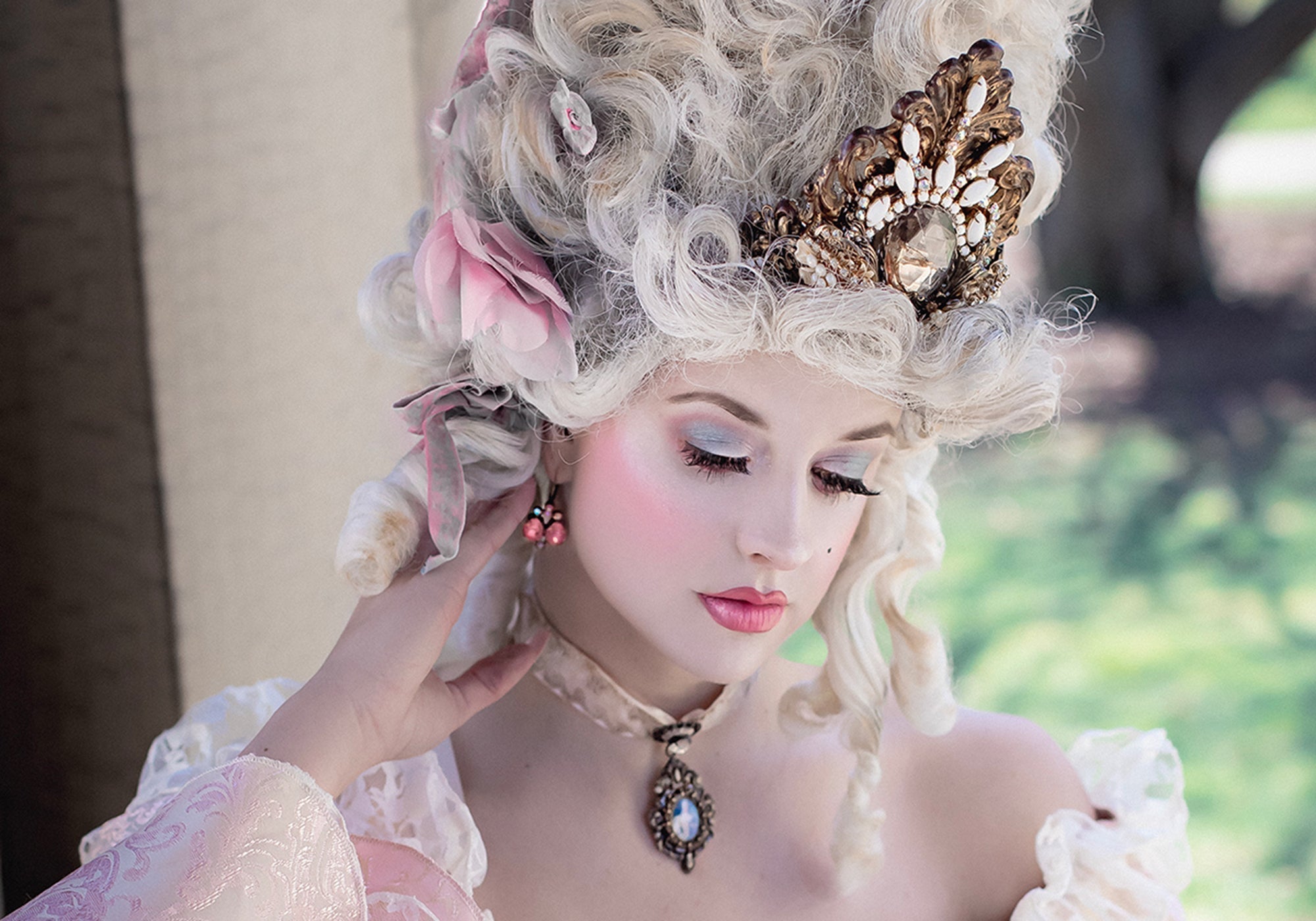
Marie Antoinette’s wardrobe has been mythologized more than almost any other woman in fashion history. Over time, popular culture has transformed her clothing into a caricature of excess: towering wigs, impossible corsetry, and constant extravagance. The reality of what she actually wore is far more nuanced, more human, and far more interesting.
To understand Marie Antoinette’s wardrobe, one must separate historical record from later invention.
Court Dress and Obligation
As Queen of France, Marie Antoinette was required to dress according to the rigid protocols of the French court. Formal court attire was not a matter of personal taste, but of political visibility. These garments were structured, ceremonial, and symbolic.
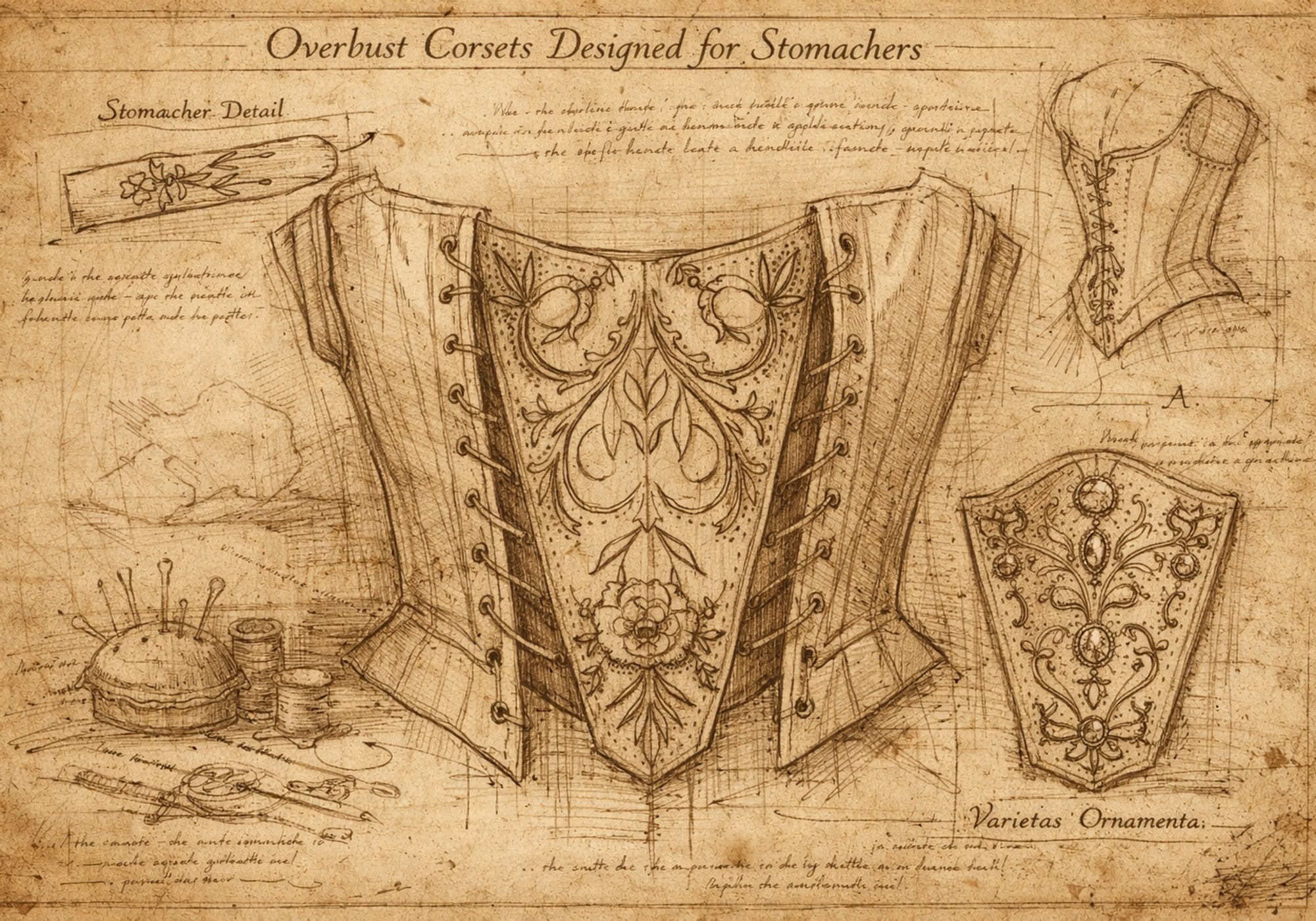
Court gowns were built over a structured bodice, often incorporating stays or corseted foundations that supported posture rather than restricted breathing. These stays were not designed for tightlacing. Their purpose was alignment and silhouette, creating the elongated torso and lifted carriage expected of royal presentation. The gowns themselves were elaborate, often made of silk, brocade, or satin, with panniers extending the skirt horizontally to signal rank and status.
These garments were heavy, formal, and worn for specific occasions. They were not Marie Antoinette’s daily dress.
The Reality of Corsetry
Contrary to popular myth, Marie Antoinette was not laced into agony. Eighteenth-century corsetry was structurally different from later Victorian corsets. Stays were shaped to support the torso evenly, distribute weight, and encourage upright posture. They were typically laced to fit, not to reduce the waist to extremes.
Surviving garments and written accounts show that these stays allowed for movement, breathing, and long hours of wear. Discomfort came not from the corset itself, but from the layers, weight, and formality required by court life.
Informal Dress and Personal Choice
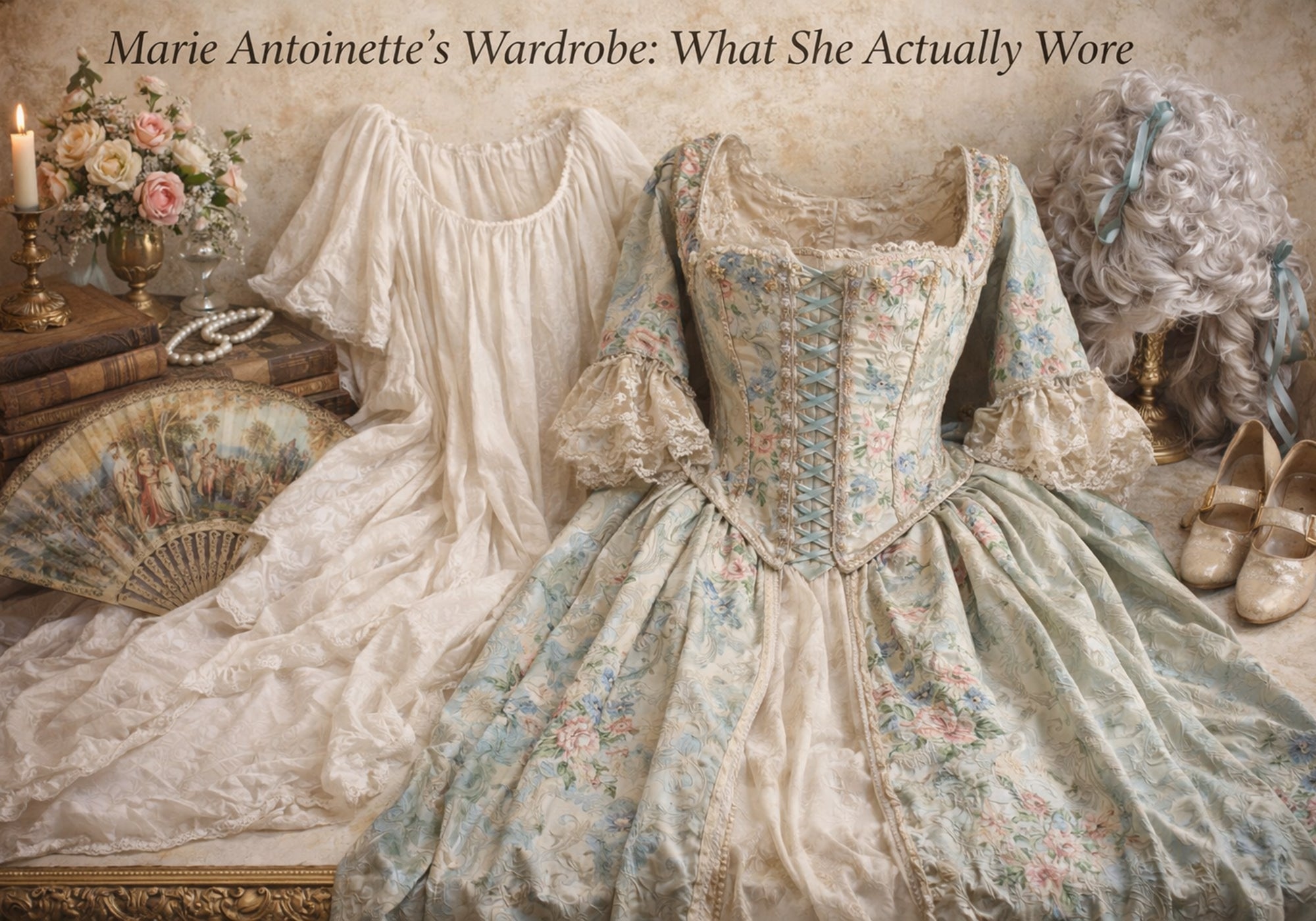
Away from court, Marie Antoinette increasingly rejected rigid formality. At the Petit Trianon, she favored simpler garments that allowed freedom of movement and personal expression. Most famously, she wore the chemise à la reine, a softly gathered white cotton dress that scandalized court society precisely because it lacked visible structure and overt luxury.
This was not carelessness, but intention. The chemise dress was worn with light support beneath, often simple stays, and reflected a shift toward comfort, naturalism, and personal autonomy. It marked a profound change in how royal women related to clothing.
Fabric, Craft, and Repetition
Marie Antoinette’s wardrobe was extensive, but not endlessly unique. Gowns were altered, reworked, and reused. Bodices were changed, skirts refreshed, trims replaced. Clothing was modular and adaptable, not disposable.
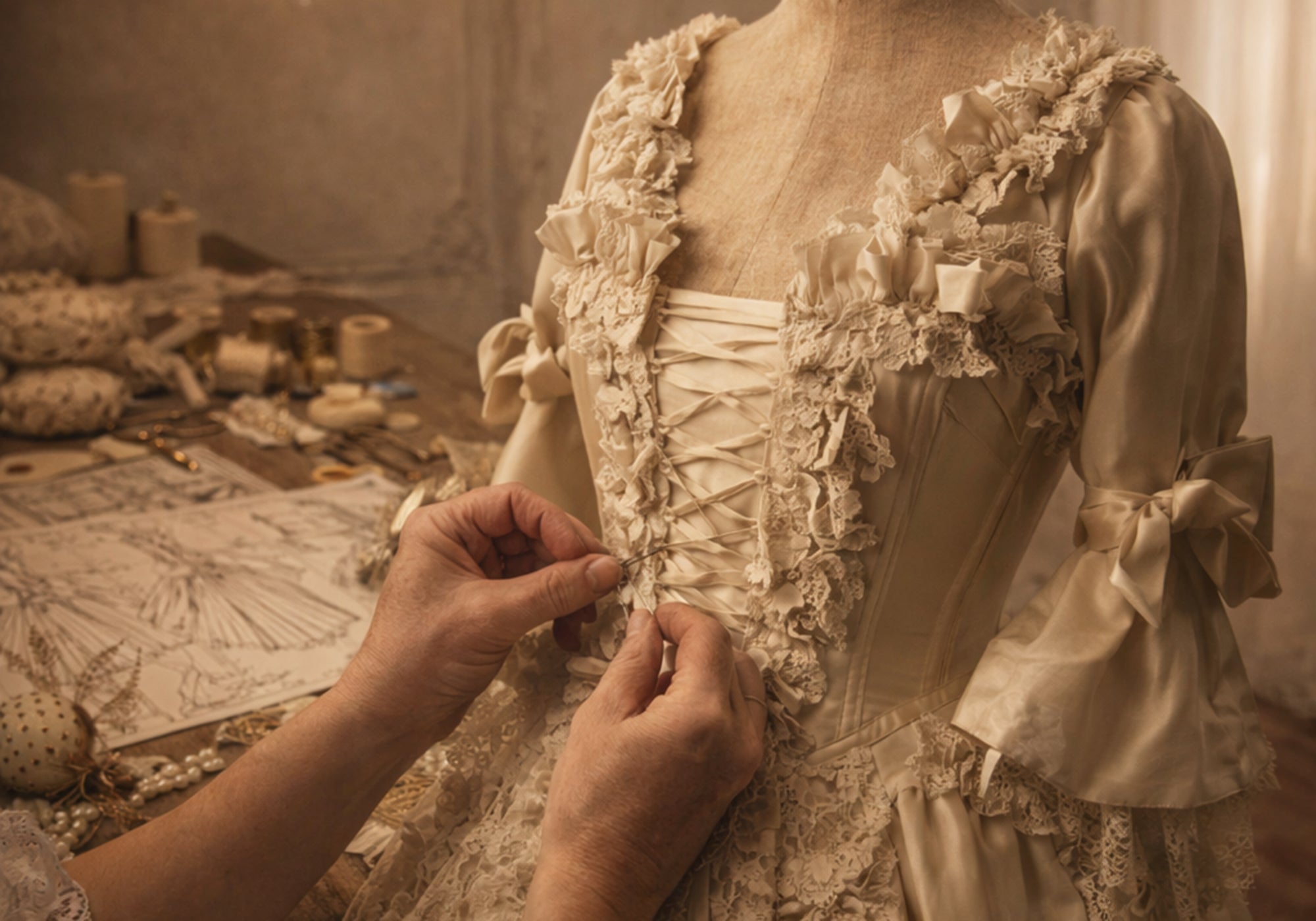
Corseted foundations were often reused across multiple gowns, providing consistency of fit while allowing surface layers to evolve. This practice mirrors historical dressmaking traditions more closely than the modern idea of single-use couture.
What She Did Not Wear
Marie Antoinette did not wear corsets designed to crush the ribs or dramatically reduce the waist. She did not dress in constant extravagance. She did not live permanently encased in rigid formality.
These myths emerged later, shaped by political propaganda, revolutionary hostility, and modern reinterpretations that favor spectacle over accuracy.
Why Accuracy Matters
Understanding what Marie Antoinette actually wore allows us to see her not as a symbol, but as a woman navigating power, visibility, and identity through dress. Her wardrobe reflects the tension between obligation and autonomy, tradition and reform.
At Immortelle, historical accuracy is not nostalgia. It is respect. Corseted garments were not instruments of suffering, but carefully engineered systems designed to support the body and the life it lived.
Marie Antoinette’s clothing tells a story not of excess alone, but of structure, adaptation, and the quiet negotiation between public expectation and private self.