Understanding the Structure Beneath an Immortelle Gown
At Immortelle Bijouterie, a gown is not merely worn—it is constructed upon a quiet architecture of layers. Though our corsetry is fully integrated into the gown itself, the foundation beneath remains essential to achieving the intended silhouette, movement, and comfort.
Each layer exists with purpose. When observed in the correct order, the gown performs as designed—balanced, graceful, and enduring.
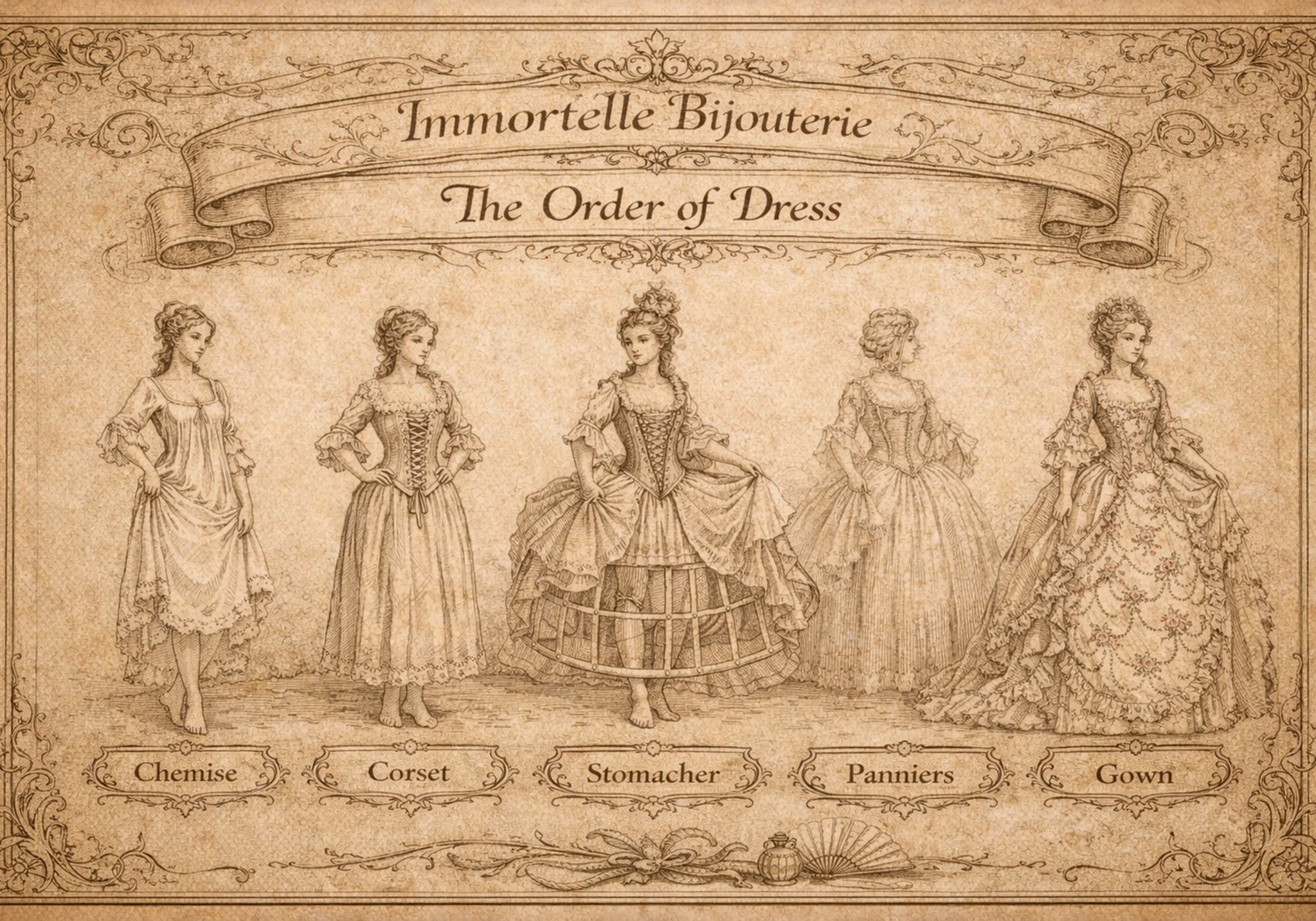
1. The Chemise
The chemise is always the first layer, worn directly against the skin. Traditionally crafted of linen or cotton, it protects the interior of the gown while providing comfort and breathability. No corseted garment—integrated or otherwise—should ever be worn without one.
2. The Hoop or Panniers
The structural volume of the skirt is established next.
-
Hoops create a full, 360-degree bell silhouette, ideal for grand ballgowns and sweeping ceremonial designs.
-
Panniers (also known as side hoops or baskets) extend the skirt at the hips, widening the gown to better display surface design while preserving movement through the front and back.
Some Immortelle gowns benefit from the use of both—particularly when fullness and visibility of design must coexist. When a specific foundation is recommended, it will always be noted within the gown’s listing.
3. The Crinoline (or Cushion Layer)
Placed over the hoop or panniers, the crinoline serves a vital role:
to soften the structure beneath and conceal the boning from view.
This layer ensures the skirt drapes smoothly, prevents shadowing of the framework, and allows fabrics to move with fluidity rather than rigidity.
Immortelle panniers are designed with this consideration in mind.
Our panniers incorporate layered lace and textile cushioning, which helps soften the bones themselves—often reducing or eliminating the need for a separate crinoline depending on the gown and fabric weight. This detail allows for comfort, elegance, and visual refinement without unnecessary bulk.
4. The Immortelle Corset Gown (with Integrated Corsetry)
Once the foundation is complete, the Immortelle gown is donned.
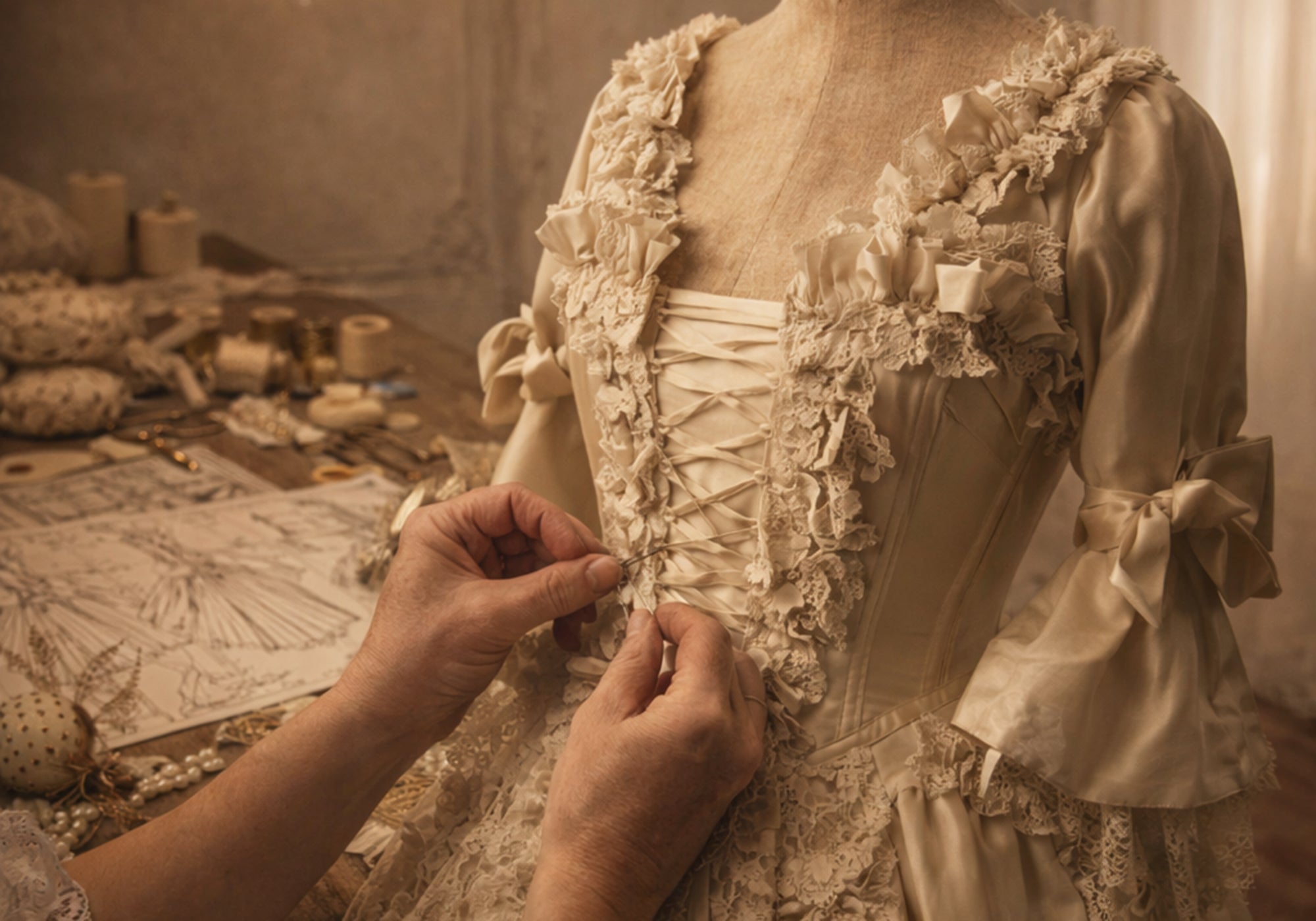
Each Immortelle gown contains a fully built-in, steel-boned corset, permanently integrated into the bodice. This internal structure shapes the waist, supports the bust, and establishes posture—removing the need for a separate corset while preserving historical silhouette and support.
The gown is laced over the prepared foundation, allowing the skirt to fall correctly over the hoop, panniers, and crinoline beneath.
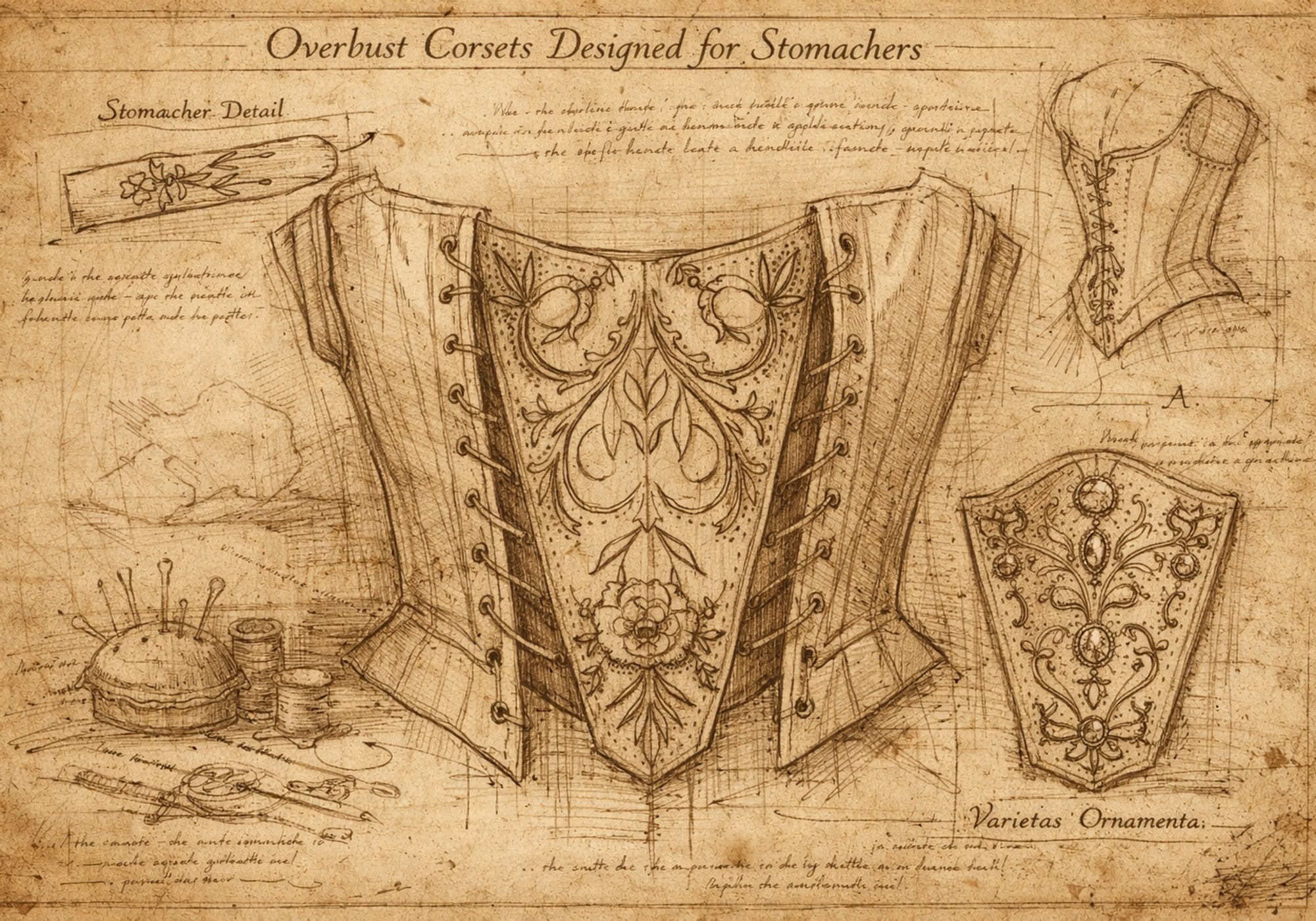
5. The Stomacher (When Worn)
When included, the stomacher is added after the gown is in place. Immortelle stomachers may be:
-
Laced directly into the bodice, or
-
Pressure-fit beneath the lacing over the modesty panel
Historically both functional and ornamental, the stomacher allows a single gown to transform—offering variation in color, embroidery, and embellishment without altering the gown itself.
6. Final Adjustments & Finishing Elements
Once laced and structured, sleeves, sashes, jewelry, gloves, and hair adornments complete the ensemble. With each layer properly placed, the gown moves as intended—balanced, supported, and commanding.
Why the Order Matters
Even with integrated corsetry, proper layering ensures:
comfort against the body
longevity of the garment
concealment of structure
and the integrity of the silhouette
At Immortelle Bijouterie, dressing is not hurried. It is a deliberate ritual—one that honors the body, the craft, and the lineage of garments designed to endure.
Should you ever require guidance on foundations or structure, our Ladies in Waiting are always pleased to assist.